
Bugs in Texas Nobody Warned New Residents About
Key Points
-
- The roaches are bigger, and some glide. A 2-inch roach near a drain is usually an outdoor American cockroach, not a sign of a dirty house.
- Fire ants sting, and they’re everywhere. Check the yard before kids and pets play.
- Termites can swarm in January. In South Texas, swarm season starts in winter, not spring.
- Most Texas bugs are a nuisance; a few need attention. Knowing which is which saves you money and worry.
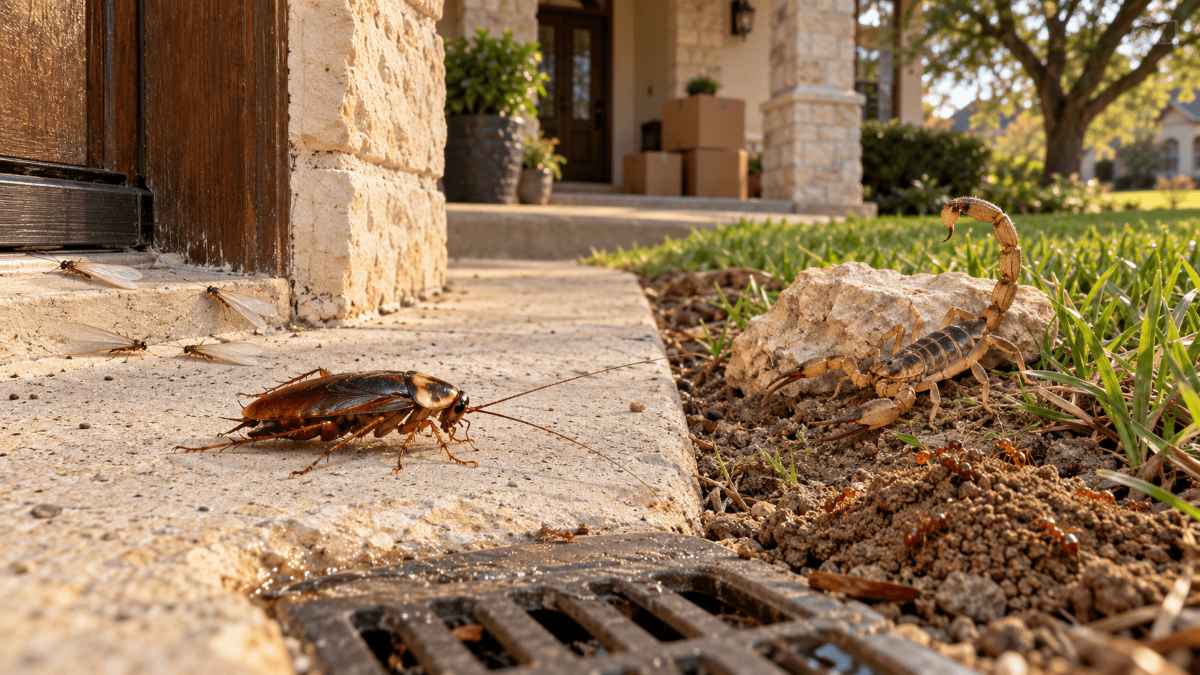
If you just moved here, the bugs in Texas that surprise newcomers most are roaches up to 2 inches long that can glide, fire ants in nearly every lawn, scorpions that wander indoors, and termites that swarm in the middle of winter. Some of these are normal Texas life. A few are worth a phone call.
Plenty of our customers are new to Texas, from Arizona transplants to military families at JBSA Randolph. One wrote that they were simply unprepared for “the size of the cockroaches.” Here’s what to expect, what’s normal, and what isn’t. For everything else, browse our Texas pest library.
Why Do Bugs in Texas Feel So Different?
It’s the heat and the long warm season. Many pests stay active most of the year, and Texas A&M AgriLife notes that long hot, dry stretches push pests indoors looking for water and cooler air. Ants, scorpions, roaches, and rodents all make that move.
What surprises you depends on where you lived before:
|
If you moved from |
What will probably surprise you |
|
The Northeast or Midwest |
Pests active much of the year, termites swarming in January, fire ants in the lawn |
|
Arizona or the desert Southwest |
Scorpions are still here (a different species), plus big humidity-loving roaches |
|
California or the Pacific Northwest |
Roach size, fire ants, and a long mosquito season |
The Roaches Are Bigger (and Some Glide)
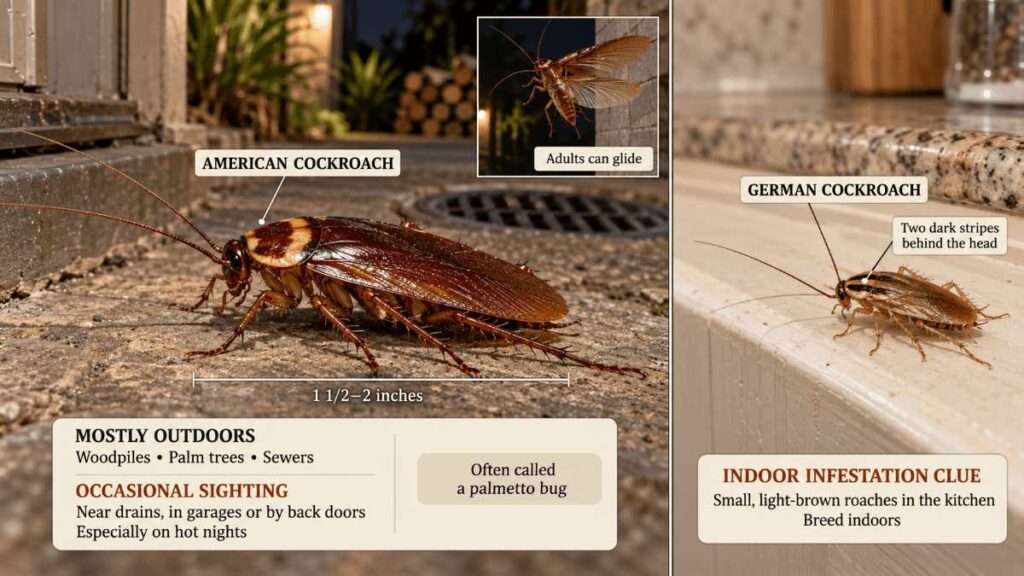
That giant reddish-brown roach is most likely an American cockroach. According to the Texas A&M field guide, they reach 1 1/2 to 2 inches, live mostly outdoors in woodpiles, palm trees, and sewers, and adults can glide. Many Texans call them palmetto bugs.
What’s normal: an occasional big roach near a drain, in the garage, or by the back door, especially on hot nights.
What’s not: small, light-brown roaches with two dark stripes behind the head in your kitchen. Those are German cockroaches, which breed indoors. For treatment options, see our cockroach control page.
Fire Ants Are Everywhere, and They Sting
Fire ants build mounds in lawns, along sidewalks, and around playgrounds, and they swarm out to sting when the mound is disturbed. According to Texas A&M’s fire ant program, stings burn and itch, and a white pustule usually forms within a day or two. Stings can get infected and may scar.
Some people become sensitive to fire ant stings. Get emergency care right away for chest pain, nausea, heavy sweating, trouble breathing, serious swelling, or slurred speech after a sting.
Newcomer tip: walk the yard before kids or pets go out, and never stand on a mound to take a photo. Our fire ant guide covers identification and control, and we also cover fire ants and pets.
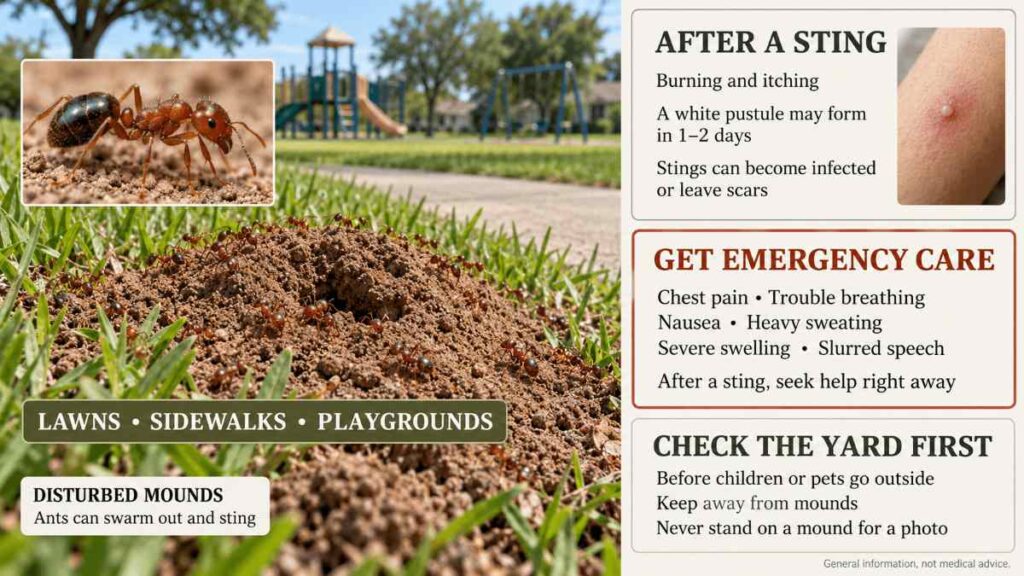
This section is general information, not medical advice.
Yes, Scorpions Come Inside
The scorpion you’re most likely to see is the striped bark scorpion, the only species found throughout Texas. If you moved from Arizona, here’s some relief: Texas A&M says no Texas scorpions are considered lethal, though stings are painful.
They’re more common on the Hill Country edge, around Helotes and Boerne, and in summer, when heat sends them looking for water. Even one of our customers who moved here from Arizona found scorpions a problem in Texas. For removal steps, see our guide to eliminating scorpions in Texas.
Termites Swarm in Winter Here
This one catches almost everyone. Subterranean termite swarming begins in South Texas in January and February, months earlier than many newcomers expect.
Swarmers look like small flying ants, but termites have straight antennae and a broad waist. If you see them swarming inside, take it seriously: Swarmers indoors usually mean an active infestation in the structure. See our post on flying ants vs. termites, or book a free termite inspection.
The Bugs You May Have Never Heard Of
Kissing bugs
Kissing bugs are dark, cone-headed insects with about 12 orange spots around the edge of the body, according to Texas A&M. They’re active at night and can carry the parasite that causes Chagas disease, which spreads through their feces, not the bite itself. They’re uncommon, but if you find one, Texas A&M’s Kissing Bug program will identify it from a photo. Read our kissing bug guide.
Fall crickets
In August and September, black field crickets can pile up around bright lights and doors. Texas A&M says outdoor lighting is the main cause. They’re harmless and don’t breed indoors.
Mosquitoes
Expect a long mosquito season. Our San Antonio mosquito season guide covers when they peak and how to cut them back.
Your First-Year Texas Bug Calendar
| When | What to watch for |
| January to February | Termite swarms in South Texas |
| Summer heat and drought | Scorpions, ants, and roaches moving indoors for water |
| August to September | Cricket swarms around lights |
| After heavy rain | Millipedes and pill bugs at the doors |
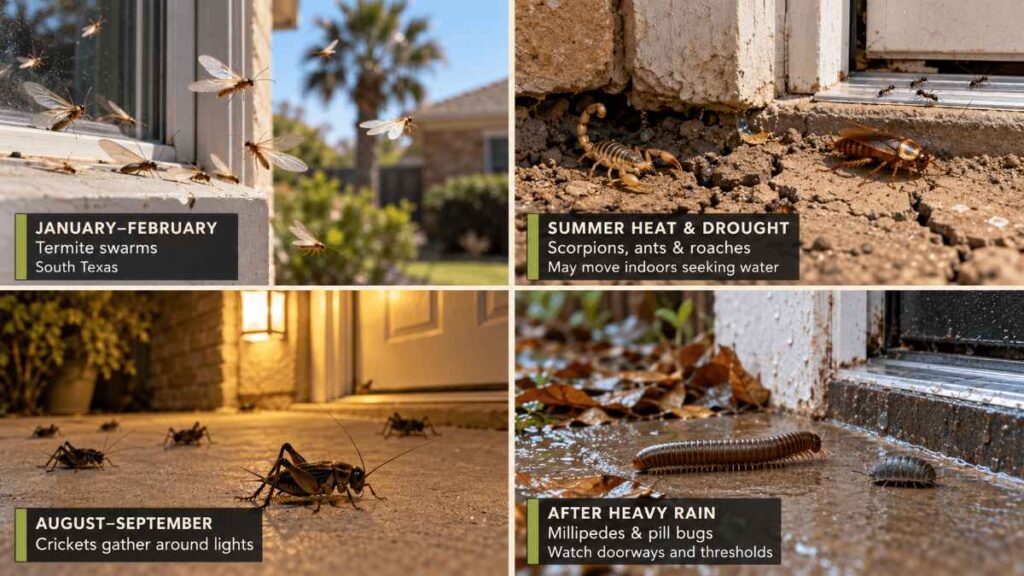
Sources: Texas A&M AgriLife (termites, heat and drought, crickets).
What’s Normal, and When Should You Call?
Most bugs in Texas are a nuisance, not an emergency. It’s normal to see:
-
- An occasional big roach near a drain or door
- Crickets in the garage in late summer
- A scorpion now and then in summer, especially near the Hill Country
It’s worth a call if you see:
-
- Small striped roaches in the kitchen
- Termite swarmers inside the house
- Scorpions indoors every week
- Fire ant mounds where kids and pets play
When a Beeline Pest Control technician comes out, they’ll tell you what’s typical for your neighborhood and what isn’t, which is the part our customers mention most in reviews. Our residential pest control service covers the common Texas pests. If you bought a newly built home, see our guide to pest control for new homes in San Antonio. Military families settling near JBSA Randolph can also check our guides to Universal City and Converse.
Welcome to Texas
Most of the bugs in Texas that startle newcomers are just part of living here. A few, like indoor termites, German roaches, and fire ants in the play area, deserve quick attention. Now you know which is which.
If you’d like someone to walk your new place and tell you what’s normal, Beeline can help. Request a free quote, call 210-739-1320, or text 210-972-1672.
Avoid Costly Pest Control Mistakes!
Don’t let DIY errors cost you more in the long run! Beeline Pest Control of Texas provides expert inspections and science-based solutions to correct common pest control mistakes to avoid. Protect your San Antonio home with a customized plan that gets rid of pests for good!
No Hidden Charges
Frequently Asked Questions
What bugs should I expect when moving to Texas?
Expect big outdoor roaches, fire ants, scorpions in some areas, mosquitoes, and termites. Most of the bugs in Texas are nuisances, but termites, German roaches, and fire ants near the house deserve attention.
Why are Texas cockroaches so big?
The big ones are usually American cockroaches, which grow to 1 1/2 to 2 inches. They’re mostly outdoor roaches that wander in through drains, doors, and gaps.
Are there scorpions in San Antonio?
Yes. The striped bark scorpion is found throughout Texas, and it’s especially common on the Hill Country edge. Heat and drought send them indoors looking for water.
Are Texas scorpions as dangerous as Arizona's?
Texas A&M says no Texas scorpions are considered lethal. Stings are painful and can swell and itch for several days, so anyone with a strong reaction should still get medical care.
Do bugs go away in winter in Texas?
Not completely. In South Texas, termites start swarming in January and February, and indoor pests like German roaches stay active year-round.
When do termites swarm in Texas?
In South Texas, swarming begins in January and February, according to Texas A&M. In the Panhandle, swarms don’t happen until April or May.
How do I know if a fire ant sting needs a doctor?
Most stings cause burning, itching, and a white pustule within a day or two. Get emergency care right away for chest pain, nausea, heavy sweating, trouble breathing, serious swelling, or slurred speech.
What is a kissing bug, and should I worry?
It’s a cone-headed insect with orange spots around its edge that can carry the parasite behind Chagas disease. They’re uncommon in homes, but if you find one, send a photo to Texas A&M’s Kissing Bug program for identification.
What's a palmetto bug?
It’s a common Southern nickname for large outdoor roaches, usually American cockroaches. One near a drain or door is normal in Texas and doesn’t mean your house is dirty.
Do I need pest control when I move to Texas?
Not always. Many newcomers start with an inspection to learn what’s normal for their area, then decide. If you’re seeing termites, German roaches, or frequent scorpions, treatment is worth it.