
Why San Antonio Has Such a Bad Mosquito Season (and How to Fight Back)
Keypoints:
- San Antonio’s heat, humidity, and rainy stretches create ideal mosquito breeding conditions for much of the year.
- Mosquito season here typically runs from March through November, longer than most homeowners plan for.
- Standing water around a yard, even a small amount, is usually the real culprit.
- A few consistent habits make a bigger difference than most store-bought gadgets.
- Professional mosquito treatment is worth considering when the problem does not let up on its own.
Introduction
You finally sit down for an evening on the patio, drink in hand, and within about ninety seconds you are slapping at your ankles instead of relaxing. If that scene feels a little too familiar, you are not imagining that mosquito season in San Antonio is worse than in a lot of other places. It has a well-earned reputation, and it is not just bad luck.
Here is why the season hits this hard, how long it really sticks around, and what actually helps versus what is mostly folklore, so you can get back to enjoying your yard instead of defending it.
Why Is Mosquito Season So Bad in San Antonio
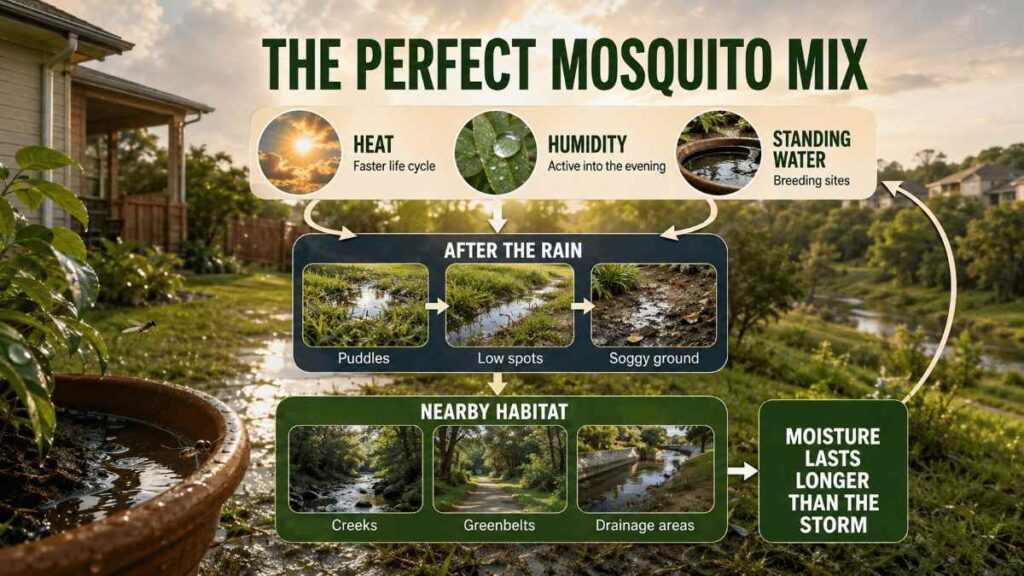
Mosquitoes thrive on three things: heat, humidity, and standing water. San Antonio hands them all three for a large chunk of the year. Warm temperatures speed up the mosquito life cycle, humidity keeps them active well into the evening, and seasonal rain leaves behind puddles, low spots, and soggy patches that make ideal breeding grounds. Local geography piles on top of that. The creeks, greenbelts, and drainage areas running through many San Antonio neighborhoods hold moisture long after the rain has stopped, giving mosquitoes plenty of habitat close to home.
When Does Mosquito Season Start and End in San Antonio
Most homeowners plan around peak summer, but mosquito activity in San Antonio typically runs from as early as March through November, a much longer window than a lot of people expect. That length means prevention that only kicks in come June is already playing catch-up. Treating the season as a spring through fall commitment, rather than a midsummer scramble, is what actually keeps a yard usable for most of the year.
Are Mosquitoes Just an Itchy Nuisance, or Is There a Real Health Risk
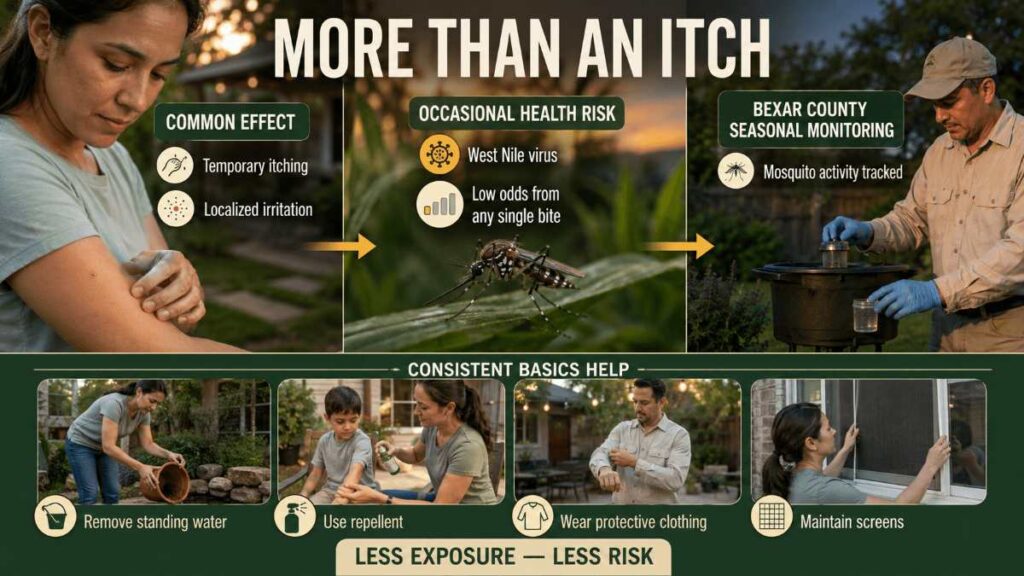
There is a practical reason to care about mosquitoes beyond comfort. Mosquitoes in Texas can occasionally carry illnesses like West Nile virus, and Bexar County’s health department tracks mosquito activity locally each season for exactly this reason. Any single bite carries low odds, and the same habits that cut down on itchy evenings also chip away at that small health risk, so there is nothing extra to do here beyond staying consistent with the basics below.
Where Do Mosquitoes Breed in a Typical Yard
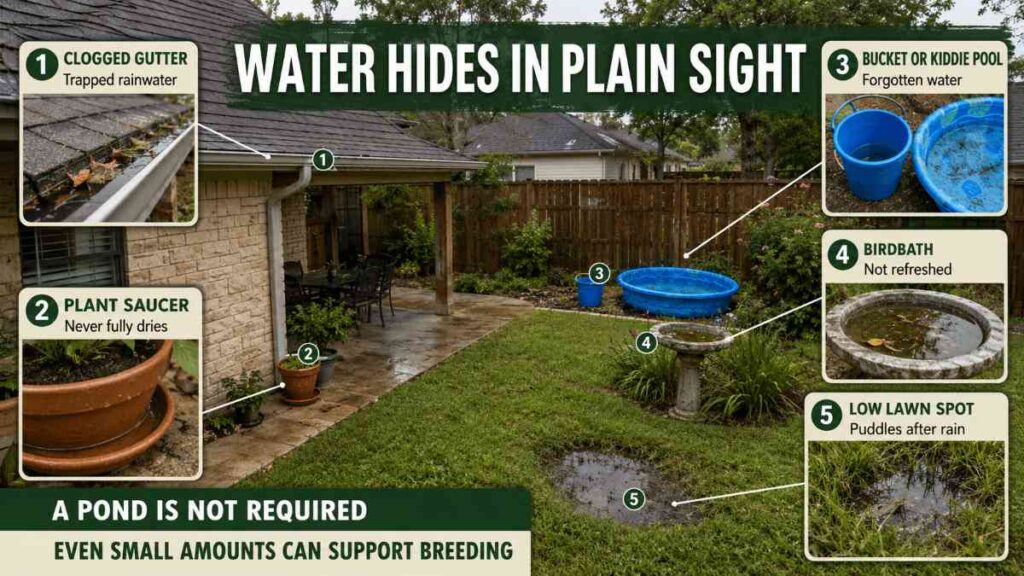
This is the detail that surprises most homeowners. Mosquitoes do not need a pond. They need remarkably little water, and it tends to hide in plain sight.
- A clogged gutter holding a couple of inches of water.
- A plant saucer that never quite dries out.
- A forgotten bucket or kiddie pool tucked in a corner.
- A birdbath that has not been refreshed in a week.
- A low spot in the lawn that puddles after every rain.
Any single one of these is enough to keep a mosquito population going right in your own backyard.
How Can You Get Rid of Mosquitoes in Your Yard
The most effective habits also happen to be the least exciting. Walk the yard on a regular basis and dump out anything holding water. Keep gutters clear so they drain instead of pooling. Mow the lawn and cut back dense vegetation, since adult mosquitoes rest in shaded, overgrown spots during the day. Check window and door screens for gaps or tears, since it only takes a small opening for mosquitoes to get inside. Doing these things every week matters far more than doing any single one of them perfectly.
Do Bug Zappers, Citronella Candles, and Foggers Actually Work
Worth being straightforward about this one. Bug zappers attract and kill some insects, but a surprising amount of what they catch is not even mosquitoes, and they barely dent a yard’s overall population.
Citronella candles offer mild, short-range relief right around where they are burning, which is fine for a single evening but does nothing to change how many mosquitoes are breeding nearby.
Foggers can knock down active mosquitoes for a day or two, but without addressing standing water, that effect fades fast. None of these are a waste of money; they simply work best as a small boost alongside the habits above, not a stand-in for them.
Since store-bought options only go so far, it helps to know what a professional approach adds on top of them.

When Should You Call a Professional for Mosquito Control
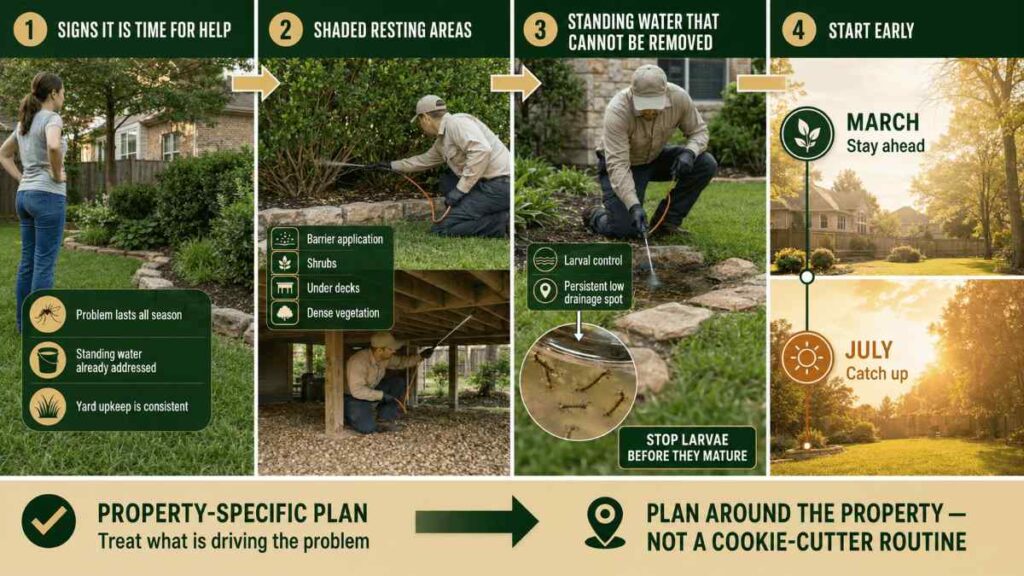
A single rough evening outside is normal. A yard that stays a problem all season, no matter how diligent you are about standing water and yard upkeep, is a sign it is time for outside help.
Professional mosquito treatment typically targets two things a homeowner cannot always reach alone: the shaded resting areas mosquitoes retreat to during the day, treated with a barrier application, and any standing water that cannot realistically be removed, such as a low drainage spot, treated to stop larvae before they mature.
Texas Beeline builds a treatment plan around whichever of those is actually driving the problem on your property, rather than applying the same routine to every yard. Since the season here often starts in March, scheduling that first treatment in early spring keeps you ahead of it instead of catching up in July.
Examples
Picture a yard with a gutter that has been clogged since last fall and a kiddie pool that got pushed into a corner and forgotten. Within a couple of weeks, that combination alone can support a steady mosquito population, no rainstorm required.
Now picture a similar yard nearby where the homeowner checks for standing water every weekend and keeps the gutters clear. Evenings outside in that second yard are a different experience entirely, not because of luck, but because there is simply nowhere close by for mosquitoes to breed.
Expert Tips
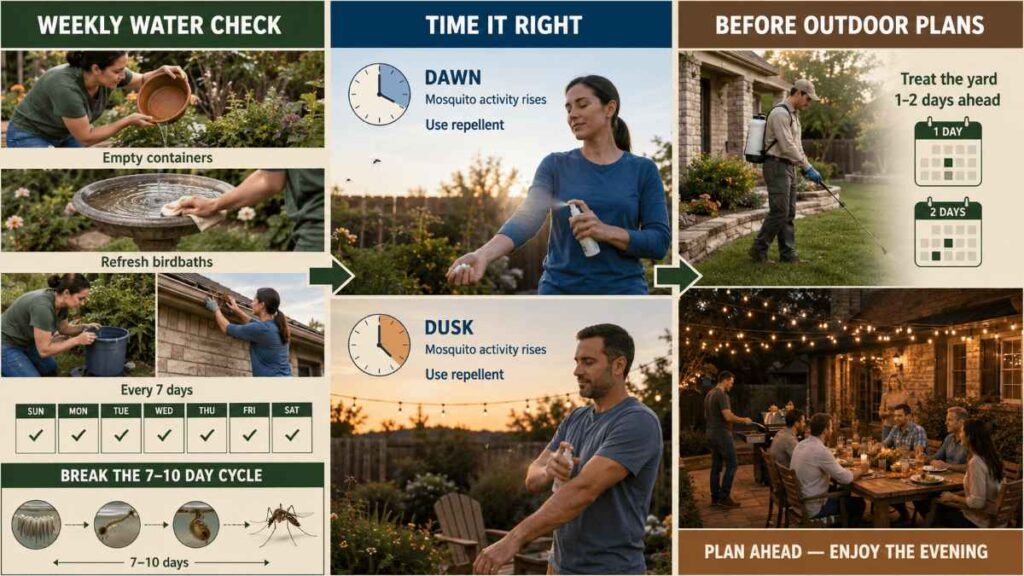
Check for standing water once a week. Mosquito eggs only need about a week to ten days to develop into biting adults, so a weekly habit stays ahead of the cycle.
Time any yard treatment or personal repellent use around dusk and dawn, when mosquitoes are most active. Planning a barbecue or an evening outside with guests? Treating the yard a day or two beforehand can turn a miserable night into a pleasant one.
Conclusion
San Antonio’s mosquito season is a real, climate-driven challenge, not just bad luck or one rough year, and it runs longer than most people plan for. The good news is that most of the fix comes down to consistent, unglamorous habits rather than gadgets or guesswork.
If you have handled the basics and mosquitoes are still ruining your evenings outside, Texas Beeline can take a look at your property and build a treatment plan around what is actually driving the problem.
Reach out to Texas Beeline this spring to get ahead of the season instead of chasing it all summer.
Avoid Costly Pest Control Mistakes!
Don’t let DIY errors cost you more in the long run! Beeline Pest Control of Texas provides expert inspections and science-based solutions to correct common pest control mistakes to avoid. Protect your San Antonio home with a customized plan that gets rid of pests for good!
No Hidden Charges
Frequently Asked Questions
Why does San Antonio have such a bad mosquito season?
The combination of heat, humidity, and seasonal rain creates ideal breeding conditions for much of the year, and local creeks and drainage areas add even more nearby habitat.
How long does mosquito season last in San Antonio?
Mosquito activity typically runs from as early as March through November, longer than many homeowners plan for when they only think about peak summer.
What attracts mosquitoes to a yard?
Standing water is the biggest draw, along with shaded, overgrown vegetation where adult mosquitoes rest during the day.
Do mosquitoes carry diseases in Texas?
Mosquitoes can occasionally carry illnesses like West Nile virus, though the risk from any single bite is low. Local health departments track mosquito activity each season, and reducing mosquito activity around your home also reduces this risk.
How much standing water does it take to breed mosquitoes?
Surprisingly little. A clogged gutter, a plant saucer, or an unused bucket can hold more than enough water for mosquitoes to breed.
Do citronella candles actually keep mosquitoes away?
They offer mild, short range relief for a single evening but do not reduce the overall mosquito population nearby.
Are bug zappers effective against mosquitoes?
Not particularly. They attract and kill some insects, but often not many mosquitoes specifically, and they do not meaningfully reduce a yard’s population.
What can I do to make my yard less attractive to mosquitoes?
Eliminate standing water weekly, keep gutters clear, mow regularly, and trim back dense vegetation where mosquitoes tend to rest.
What does professional mosquito treatment actually involve?
It typically includes a barrier treatment applied to shaded resting areas and, when needed, treatment of standing water that cannot be removed, targeting both adult mosquitoes and developing larvae.
When is the best time to start mosquito prevention in San Antonio?
Since mosquito season can begin as early as March, starting yard maintenance and, if needed, professional treatment in early spring keeps you ahead of the problem rather than reacting to it mid summer.