
Black Widow Spiders in Texas: Spot One, Stay Safe
Key Points
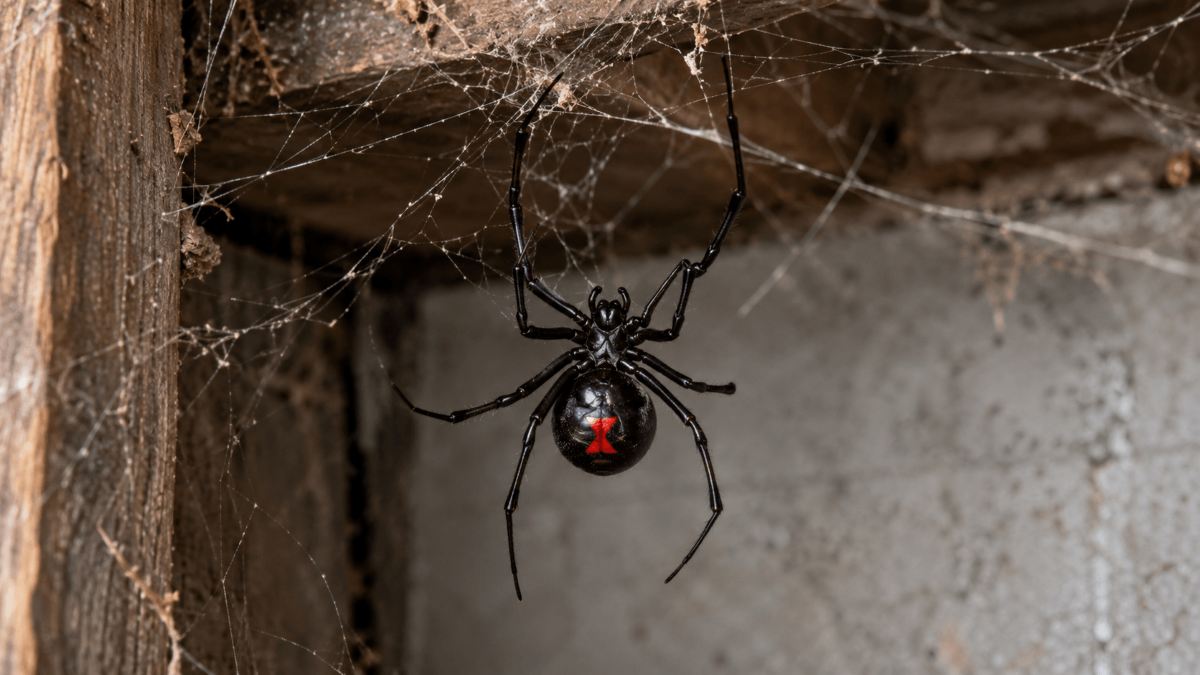
- A shiny black spider with a red hourglass on its belly is a female black widow. Males are smaller and brown.
- They hide in dark, undisturbed spots: woodpiles, meter boxes, garage corners, and under eaves.
- Bites are uncommon and rarely fatal, but they can cause severe cramps and pain, especially in children and older adults.
- Cats are highly vulnerable. If a pet may have been bitten, call your vet right away.
If you’ve found a shiny black spider with a round belly and a red hourglass underneath, you’re looking at a female black widow. Black widow spiders in Texas live indoors and outdoors throughout the state, according to the Texas Department of State Health Services, usually tucked into dark spots nobody disturbs.
They’re timid, and bites are uncommon. When a bite does happen, though, it can make an adult very sick for a day or two and hit children, older adults, and cats harder. Here’s how to recognize one, where to look, and what to do. For other species, see our spider control page.
What Does a Black Widow Spider Look Like?
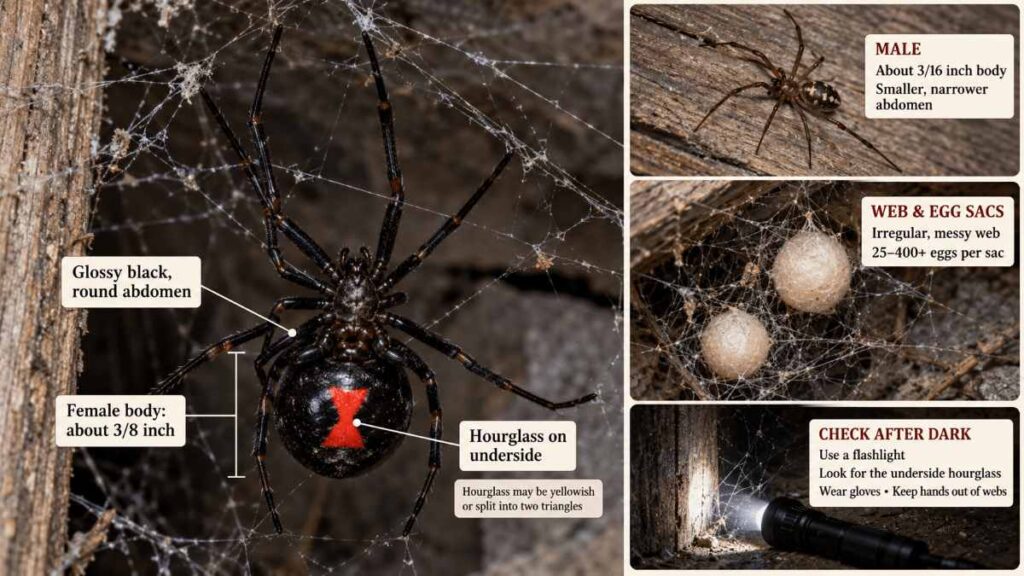
A female black widow is shiny black with a round, globe-shaped abdomen and a red or yellowish hourglass on the underside. Her body is about 3/8 inch long, and the hourglass is sometimes broken into two separate triangles.
Females vs. males
Males are about half the size, around 3/16 inch, with a narrower abdomen and white lines along the sides, according to the Texas A&M field guide. DSHS describes them as small, brown, and nondescript. The spider to watch for is the female.
Webs and egg sacs
Black widows build an irregular, messy web, not a neat wheel, usually in a dark spot sheltered from the weather. Each egg sac holds 25 to 400 or more eggs, and a female can make several in one summer. Finding egg sacs means more spiders are on the way.
Expert tip: Check at night with a flashlight. Black widows hang belly-up in the web after dark, which puts the hourglass in plain view. Wear gloves and keep your hands out of the web.
Which Widow Spiders Live in Texas?
Black widow spiders in Texas come in two nearly identical species, plus a brown cousin.
| Southern black widow | Western black widow | Brown widow | |
| Where in Texas | Statewide, most common in the east | Largely replaces the southern widow in the western half | Reported along the Gulf Coast |
| Color | Shiny black | Shiny black | Tan to brown, mottled |
| Hourglass | Red | Red | Orange to yellow-orange |
| Egg sac | Smooth | Smooth | Round and covered in spikes |
Sources: Texas A&M field guide, Pest Control Technology.
For safety purposes, the two black widows are the same spider: same look, same hiding spots, same precautions. Brown widow venom is potent, but bites usually stay local because the spider injects less of it.
Where Do Black Widows Hide Around Texas Homes?
Black widow spiders in Texas pick dark, dry, undisturbed places, and around a house that usually means storage spots you only reach into now and then. DSHS, Texas A&M, and the CDC list these as common hiding places. Use them as a walk-around checklist:
-
- Woodpiles and stacked lumber, especially against the house or fence
- Utility meter boxes
- Under eaves and in corners of porches and patios
- Garage corners, shelving, and cardboard boxes
- Outdoor furniture and fences
- Sheds and outbuildings
- Under stones, logs, and debris in the yard
- Dense shrubs next to the foundation
How Dangerous Is a Black Widow Bite?
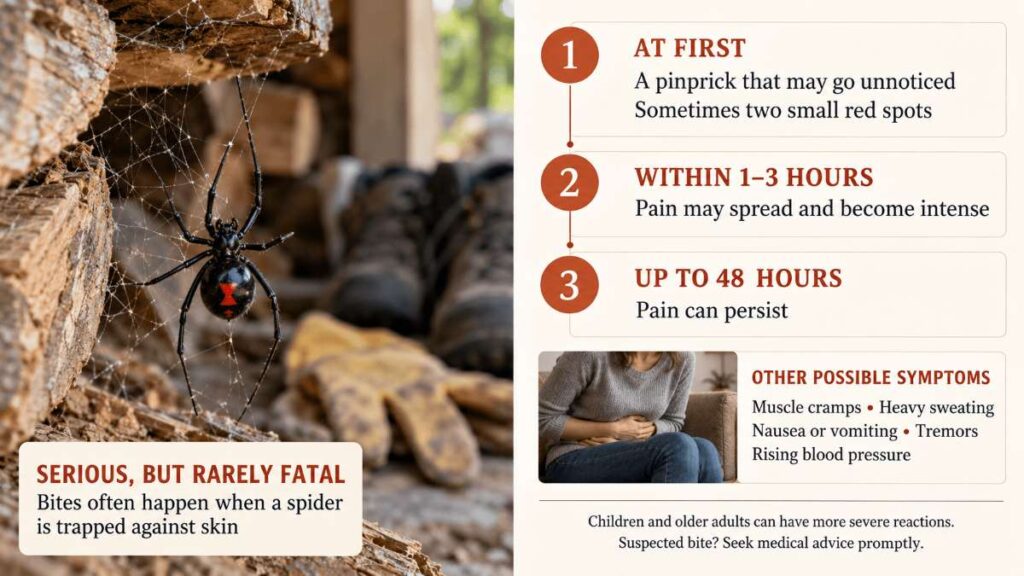
A black widow bite can be serious, but it’s rarely fatal. DSHS says the venom is reportedly 15 times more toxic than a prairie rattlesnake’s, but only a tiny amount is injected, and Texas A&M describes the spider as “quite timid.”
Most bites happen when a spider gets trapped against skin, inside a glove or shoe, or while you’re grabbing firewood. Here’s what to expect, according to Texas A&M Urban Entomology:
-
- At first: a pinprick you may not even notice, sometimes with two small red spots
- Within 1 to 3 hours: pain that spreads and becomes intense
- Other symptoms: muscle cramps (often in the belly or legs), heavy sweating, nausea, vomiting, tremors, and rising blood pressure
- How long: pain can last up to 48 hours
DSHS notes that the most severe reactions occur in children and older adults, and in rare cases a bite can be fatal.
What Should You Do If You’re Bitten?
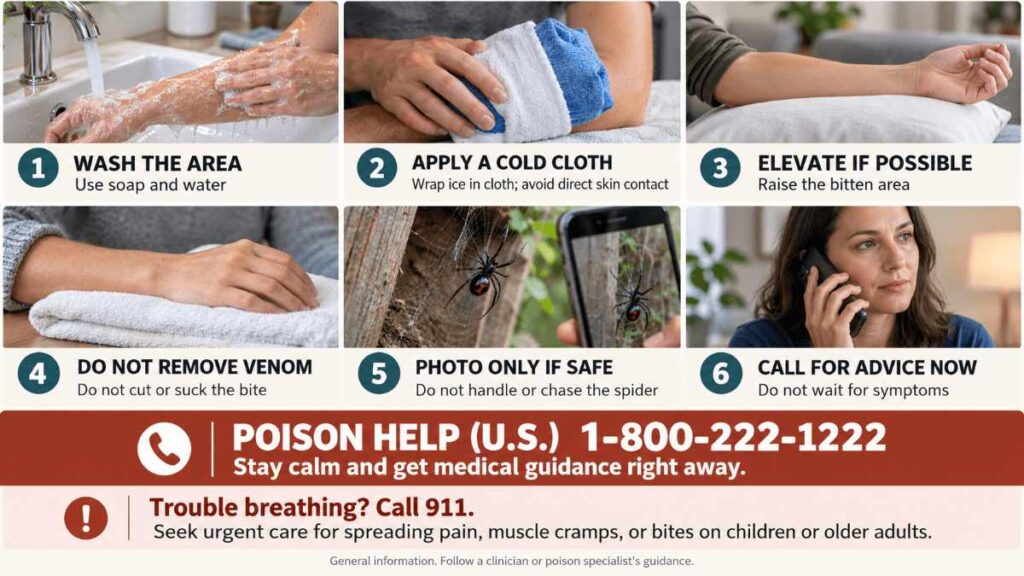
Stay calm, clean the bite, and call for medical advice right away. The CDC’s NIOSH and DSHS recommend these steps:
- Wash the bite with soap and water.
- Apply a cloth with cold water or ice to reduce swelling.
- Raise the bitten area if you can.
- Don’t try to remove the venom.
- If you can do it safely, capture the spider (or take a clear photo) so it can be identified.
- Call Poison Help at 1-800-222-1222, which connects you to the Texas Poison Center Network.
Get medical care right away for spreading pain, muscle cramps, or trouble breathing, and for any bite on a child or older adult. Antivenom exists, but DSHS says it’s used only in extreme cases.
This section is general information, not medical advice. Contact a doctor or Poison Help for guidance on a specific bite.
What If Your Cat or Dog Gets Bitten?
Call your veterinarian or an emergency clinic immediately, especially for a cat. The MSD Veterinary Manual says cats are highly vulnerable to black widow venom and fatal outcomes occur frequently, while dogs have some resistance and usually recover well.
Watch for muscle pain and cramping 1 to 2 hours after the bite, plus agitation, vomiting, or diarrhea. More severe signs can appear within 8 hours. If your cat spends time in the garage or on a patio, those are the first places to check for webs. Our pet-safe spider control guide covers how to treat spiders without putting pets at risk.
This section is general information, not veterinary advice.
How Do You Make Your Home Less Inviting to Black Widows?
Most of it comes down to habits and clutter. The CDC recommends:
-
- Shake out shoes, gloves, towels, and stored clothing before use.
- Wear gloves and long sleeves when moving firewood, boxes, or yard debris.
- Store outdoor gear and seasonal clothes in tightly closed plastic bins or bags.
Then cut down on hiding spots. Stack firewood away from the house, clear out cardboard and clutter in the garage, and knock down webs and egg sacs with a broom while wearing gloves. Sealing gaps is homeowner or handyman work. For the full list, see our guide to keeping spiders out of your Texas home.
When Should You Call a Professional?
One black widow in the woodpile is something you can handle with gloves and a broom. Call a professional if:
-
- You keep finding them, or you find egg sacs
- Webs are in high-traffic spots like the garage, patio, or a child’s play set
- You have young children, older relatives, or cats in the home
- They keep coming back after cleanup
On a spider visit, Beeline Pest Control technicians treat the perimeter, sweep webs and egg sacs from exterior eaves, and treat weep holes in the foundation, using products applied with your family and pets in mind. It’s part of our residential pest control service around San Antonio.
Respect the Hourglass
A red hourglass means a female black widow. Give her space, wear gloves in her favorite hiding spots, and keep Poison Help’s number handy. Most black widow spiders in Texas never bite anyone, and a little clutter control keeps it that way.
If you’re finding more than you’d like, Beeline can take a look. Request a free quote, call 210-739-1320, or text 210-972-1672. For other spiders around your home, see our guide to common spiders in Texas.
Avoid Costly Pest Control Mistakes!
Don’t let DIY errors cost you more in the long run! Beeline Pest Control of Texas provides expert inspections and science-based solutions to correct common pest control mistakes to avoid. Protect your San Antonio home with a customized plan that gets rid of pests for good!
No Hidden Charges
Frequently Asked Questions
Are black widow spiders common in Texas?
Yes. DSHS says black widow spiders in Texas can be found indoors and outdoors throughout the state. The southern black widow is the most widespread, and the western black widow takes over in the western half.
Do male black widows bite?
Males are much smaller, brown, and nondescript, and DSHS health warnings focus on the female. She’s the one with the shiny black body and red hourglass.
Can a black widow bite kill you?
Rarely. DSHS says the venom can cause severe whole-body reactions and, in rare cases, death. Children and older adults are at the highest risk, so they should get medical care right away after any suspected bite.
What does a black widow bite look like?
It often starts as a pinprick, sometimes with two small red spots and slight swelling. The bigger warning sign is pain and muscle cramping that spreads within 1 to 3 hours.
How long do black widow bite symptoms last?
Pain can last up to 48 hours, according to Texas A&M. Severe cases may need hospital care, so call Poison Help or a doctor early.
Where do black widows hide in a house or garage?
Look in dark, undisturbed spots: garage corners, cardboard boxes, shelving, meter boxes, woodpiles, and under eaves. Outdoor furniture and fences are common too.
Are black widows aggressive?
No. Texas A&M describes them as timid. Most bites happen when a spider is pressed against skin, such as in a glove, shoe, or woodpile.
What does a black widow egg sac look like?
It’s a smooth, round or teardrop-shaped silk sac tucked in the web. Each one can hold 25 to 400 or more eggs, and a female can make several in a summer.
Is a brown widow more dangerous than a black widow?
Usually not. Brown widow venom is potent, but brown widows tend to inject less of it, and bites usually stay local. You can spot one by its orange hourglass and spiky egg sacs.
Are black widows dangerous to cats and dogs?
Yes, especially to cats. The MSD Veterinary Manual says cats are highly vulnerable and fatal outcomes occur frequently, while dogs have some resistance. Call your vet immediately if you suspect a bite.