
Fleas vs. Ticks: Which Is Bothering Your Pet?
Key Points
-
- Fleas jump; ticks crawl and attach. Fleas are tiny and fast. A tick feels like a small bump stuck to the skin.
- Fleas live in your house too. Eggs and larvae hide in pet bedding, rugs, and furniture, so treating only the pet won’t end it.
- Flea-borne typhus is rising locally. Bexar County cases climbed from 79 in 2020 to 236 in 2025, according to Texas health officials.
- Ticks mostly come from the yard, except the brown dog tick, which can live indoors.
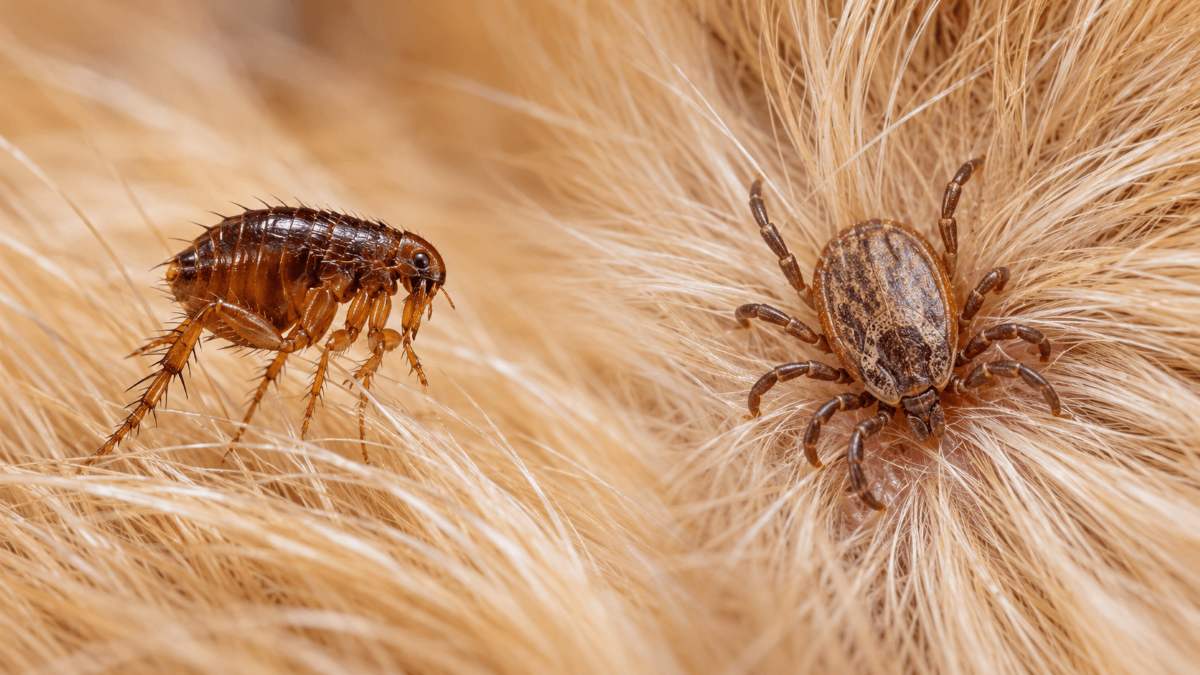
The fleas vs. ticks question usually comes down to how the pest moves. Fleas are tiny, wingless insects that jump, live on your pet, and breed in your house. Ticks are larger, crawl rather than jump, and latch on to feed for days, usually after your pet has been in grass or brush.
The difference matters because they hide in different places and need different fixes, and both can carry disease in Texas. Here’s how to tell them apart and where to treat for each. For more, see our pages on fleas and ticks.
Fleas vs. Ticks: What’s the Difference?
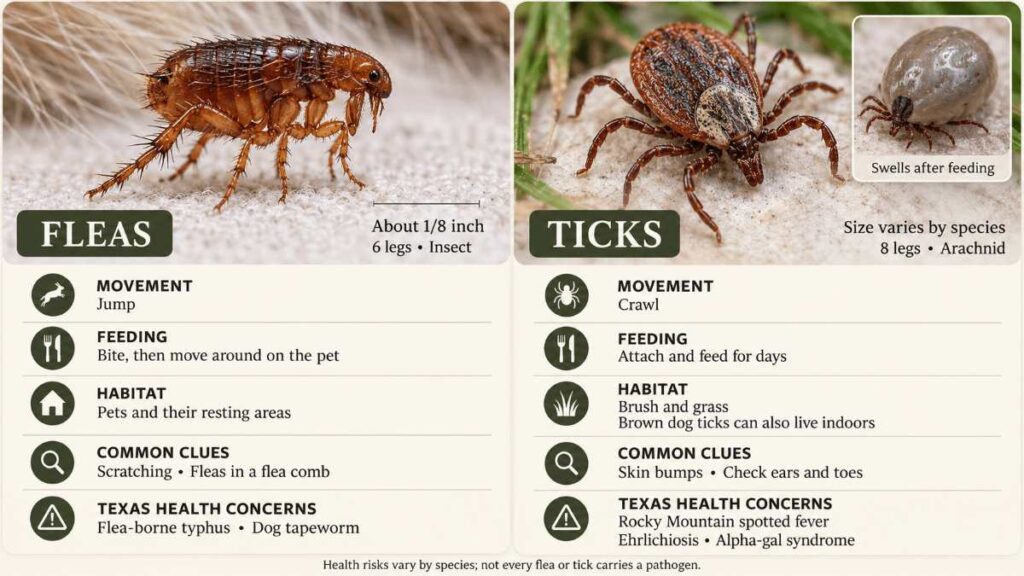
Fleas are about 1/8 inch long, reddish-brown, and built to jump; they bite and move on. Ticks are eight-legged relatives of spiders that crawl onto a host, attach, and swell as they feed. You usually find fleas by the scratching. You find ticks by feeling a bump.
| Fleas | Ticks | |
| Size and look | About 1/8 inch, reddish-brown, flattened side to side | Varies by species; swells after feeding |
| Legs | 6 (insect) | 8 (related to spiders and mites) |
| How they move | Jump | Crawl |
| How they feed | Bite, then move around on the pet | Attach and feed for days |
| Where they live | On the pet and in pet resting areas | Outdoors in brush and grass (brown dog ticks also indoors) |
| How you notice them | Scratching, fleas in a flea comb | A bump on the skin, often around ears or toes |
| Texas health concerns | Flea-borne typhus, dog tapeworm | Rocky Mountain spotted fever, ehrlichiosis, alpha-gal |
Sources: Texas A&M AgriLife Managing Fleas, AgriLife on ticks, and the Texas A&M Tick App.
How Do You Know Your Pet Has Fleas?
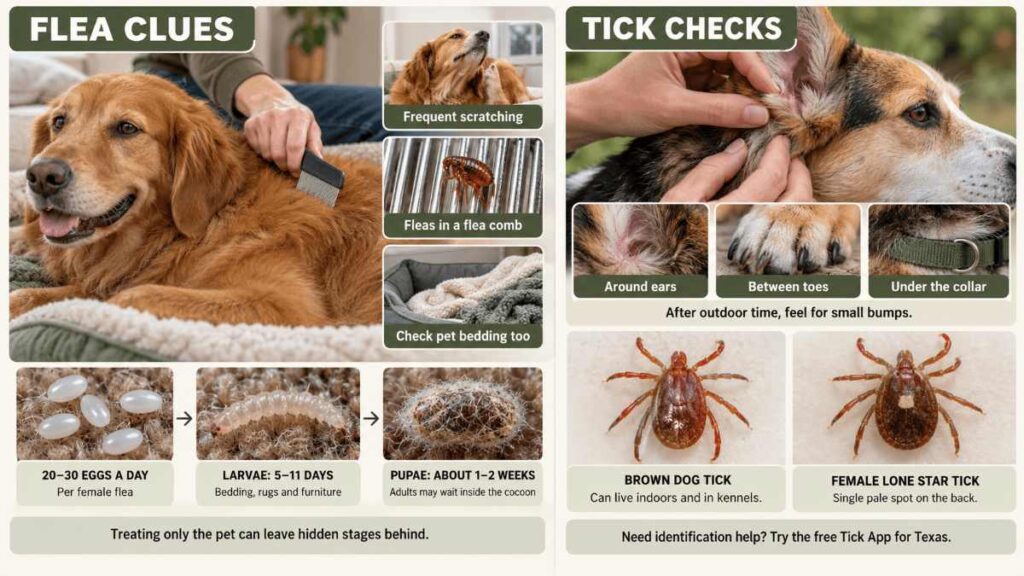
Constant scratching and fleas caught in a flea comb are the usual signs. You may also spot them in pet bedding or on your ankles.
What you see on the pet is only part of it. According to Texas A&M AgriLife:
-
- A female flea can lay 20 to 30 eggs a day.
- Larvae develop in 5 to 11 days in pet bedding, furniture, rugs, and moist, shaded spots outdoors.
- Pupae become adults in a week or two, and adults can wait inside the pupal case until a host comes along.
That’s why you can treat the dog, think you’re done, and see fleas again two weeks later. Cat fleas can also carry dog tapeworm, which pets get by swallowing fleas while grooming.
How Do You Know Your Pet Has Ticks?
Run your hands over your pet after outdoor time and feel for small bumps, especially around the ears, between the toes, and under the collar. AgriLife says the ticks Texans are most likely to find are the black-legged tick, brown dog tick, lone star tick, Gulf Coast tick, and American dog tick.
The tick that moves indoors
Most ticks live outside, but the brown dog tick is different. The Texas A&M Tick App says it’s often observed inside homes and kennels, sometimes “literally crawling up the walls.” Dogs are its main host, and it can carry the germs behind Rocky Mountain spotted fever and ehrlichiosis.
The Lone Star Tick
Females have a single spot in the center of the back, from white or cream to gold. The Tick App lists it as the main carrier of ehrlichiosis and the cause of a rash illness called STARI, and AgriLife links it to alpha-gal syndrome, a red meat allergy.
Not sure what you found? The free Tick App for Texas, from Texas A&M AgriLife, helps with identification.
Are Fleas or Ticks More Dangerous in Texas?
Both matter, but in South Texas, fleas carry a risk most people don’t know about: flea-borne typhus.
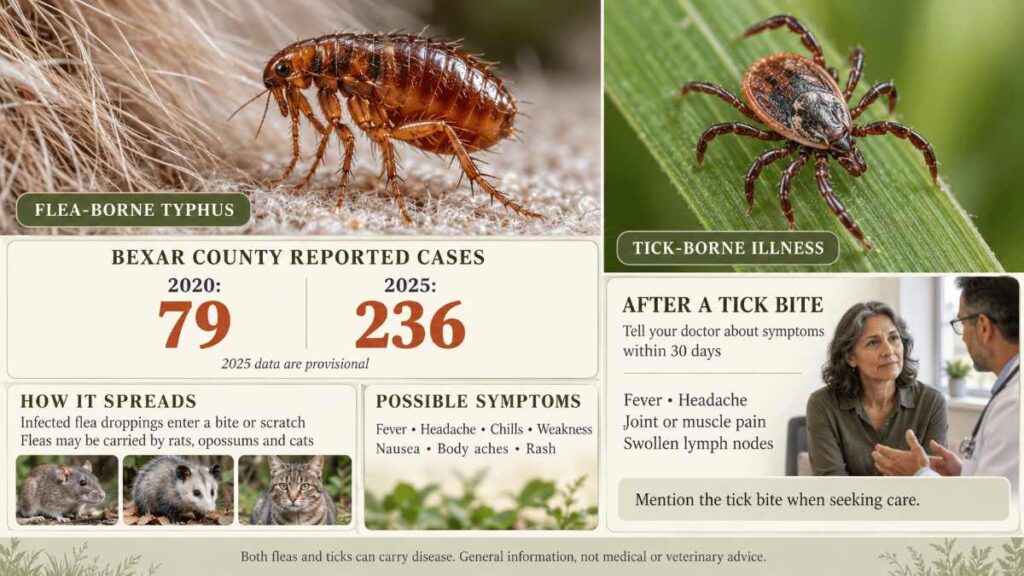
The Texas Department of State Health Services says Texas reports the most flea-borne typhus cases in the U.S., and most are in South Texas. In Bexar County, reported cases climbed from 79 in 2020 to 236 in 2025, according to DSHS county data (2024 and 2025 figures are provisional).
-
- How it spreads: infected flea droppings get into a bite or a scratch.
- What carries the fleas: rats are the natural reservoir, and opossums and cats can also carry infected fleas.
- Symptoms: fever, headache, chills, weakness, nausea, body aches, and rash.
Ticks carry their own diseases. After a tick bite, AgriLife advises telling your doctor about any fever, headache, joint or muscle pain, or swollen lymph nodes within 30 days.
This section is general information, not medical or veterinary advice.
How Do You Remove a Tick Safely?
Use tweezers or gloves, never bare fingers. AgriLife recommends grasping the tick as close to the head as possible, pulling straight out, and putting antiseptic on the skin afterward.
See a doctor (or your vet, for a pet) if the head stays in the skin, or if pain, a sore, or a rash develops.
How Do You Get Rid of Fleas vs. Ticks?
Fleas need a whole-house approach, while ticks are mostly a yard and pet problem.
|
Fleas |
Ticks |
|
|
The pet |
Flea comb, bath, and a product your vet recommends |
Daily checks and a preventive your vet recommends |
|
Indoors |
Vacuum under furniture and along walls, empty it outside, wash pet bedding |
Usually not needed, unless you find brown dog ticks inside |
|
The yard |
Only shaded pet resting spots, under decks and shrubs |
Mow, trim brush, clear brush piles, keep play areas clear |
|
Follow-up |
Treat again 10 to 14 days later |
Keep checking after outdoor time |
Sources: Texas A&M AgriLife Managing Fleas and AgriLife on ticks.
Texas A&M says sunny, well-kept lawns usually don’t need flea treatment. Focus on the shady spots where your pet lies down.
To cut the typhus risk, DSHS recommends not leaving pet food out at night and keeping rodents, opossums, and stray cats from living in your yard. Our rodent control page covers the rat side.
Expert tip: Treat the pet, the house, and the yard on the same day. Texas A&M recommends treating pet living areas at the same time as the pet, so fleas don’t reinfest from whichever spot you skipped.
When Should You Call a Professional?
Call if fleas keep coming back after a full round of treatment and the 10-to-14-day follow-up, if you’re finding ticks inside the house, or if your yard backs onto brush or a greenbelt.
Here’s how the work splits: your vet handles the pet, and Beeline Pest Control handles the home and yard, using products applied with pets in mind. It’s part of our residential pest control service. Read more about our pet-friendly pest control.
Fleas vs. Ticks: The Quick Answer
Jumping specks and a scratching pet mean fleas: treat the pet, the house, and the shady spots in the yard on the same day, then again two weeks later. A bump that won’t brush off means a tick: remove it carefully and clean up the brush.
If you’d like help with the house and yard, Beeline can take a look. Request a free quote, call 210-739-1320, or text 210-972-1672.
Avoid Costly Pest Control Mistakes!
Don’t let DIY errors cost you more in the long run! Beeline Pest Control of Texas provides expert inspections and science-based solutions to correct common pest control mistakes to avoid. Protect your San Antonio home with a customized plan that gets rid of pests for good!
No Hidden Charges
Frequently Asked Questions
What's the easiest fleas vs. ticks check?
Watch how it moves. Fleas jump and move fast through fur, while ticks crawl slowly or stay attached to the skin. An attached tick feels like a small bump.
Can fleas live in my house without pets?
Not for long. Texas A&M says adult fleas without a host live only a few days to a few weeks, but they can wait inside their pupal cases until a host shows up.
Can ticks live in my house?
Most can’t, but the brown dog tick can. Texas A&M’s Tick App says it’s often found inside homes and kennels, so ticks on walls or baseboards usually point to this species.
Do fleas carry disease in Texas?
Yes. Fleas can spread flea-borne typhus, and cat fleas can pass dog tapeworm to pets. Texas reports more typhus cases than any other state, mostly in South Texas.
What is flea-borne typhus?
It’s a bacterial illness spread when infected flea droppings get into a bite or scratch. Symptoms include fever, headache, chills, body aches, and rash, so see a doctor if they follow flea exposure.
What diseases do Texas ticks carry?
Texas ticks can carry Rocky Mountain spotted fever, ehrlichiosis, and STARI, and the Lone Star tick is linked to alpha-gal syndrome. Tell your doctor about fever, rash, or aches within 30 days of a bite.
How do I remove a tick from my dog?
Use tweezers or gloves, grasp the tick close to the head, and pull straight out. Clean the spot with antiseptic, and call your vet if the head stays in or the area gets red or sore.
Why do I still have fleas after treating my pet?
Eggs, larvae, and pupae in the house keep producing new fleas. Treat pet bedding, rugs, and resting areas along with the pet, then repeat 10 to 14 days later, as Texas A&M recommends.
Do I need to treat my yard for fleas?
Usually just part of it. Texas A&M says to treat only flea breeding spots like pet resting areas, under decks, and under shrubs, since sunny, well-kept lawns rarely need it.
When are fleas and ticks worst in Texas?
Both can be active year-round. A Texas A&M veterinarian notes fleas can be present all year because Texas rarely has a true winter, with more in spring, and AgriLife says tick populations usually peak in summer.