
Kissing Bugs and Chagas Disease in Texas: What Homeowners Need to Know
Keypoints:
- Kissing bugs live throughout Texas, and a recent study from the University of Texas at El Paso and Texas A&M AgriLife found rising rates of the parasite that causes Chagas disease in bugs collected near the border.
- Most bites go unnoticed, and most infections take years to cause symptoms, which is exactly why homeowners benefit from understanding the risk early.
- A few sealing and yard maintenance steps make a real difference.
- Testing and treatment options exist for anyone who is concerned.
Introduction
Researchers at the University of Texas at El Paso and Texas A&M AgriLife recently published findings that made headlines across the state: kissing bugs collected near the Texas border are testing positive for the parasite that causes Chagas disease at rates higher than expected.
If the term kissing bug is new to you, you are in good company. Most Texas homeowners have never encountered one, and even fewer know there is a disease connected to it.
The important thing to understand up front is that this insect has lived in Texas for generations, and the overwhelming majority of people who ever cross paths with one are never affected. What the new research adds is a clearer picture of how often these bugs carry the parasite, which makes this a good time to actually learn what they look like, why they matter, and what steps genuinely reduce the risk.
If you would rather have someone check your property in person, Texas Beeline can walk your home’s exterior and point out anything worth addressing.
What Does a Kissing Bug Look Like
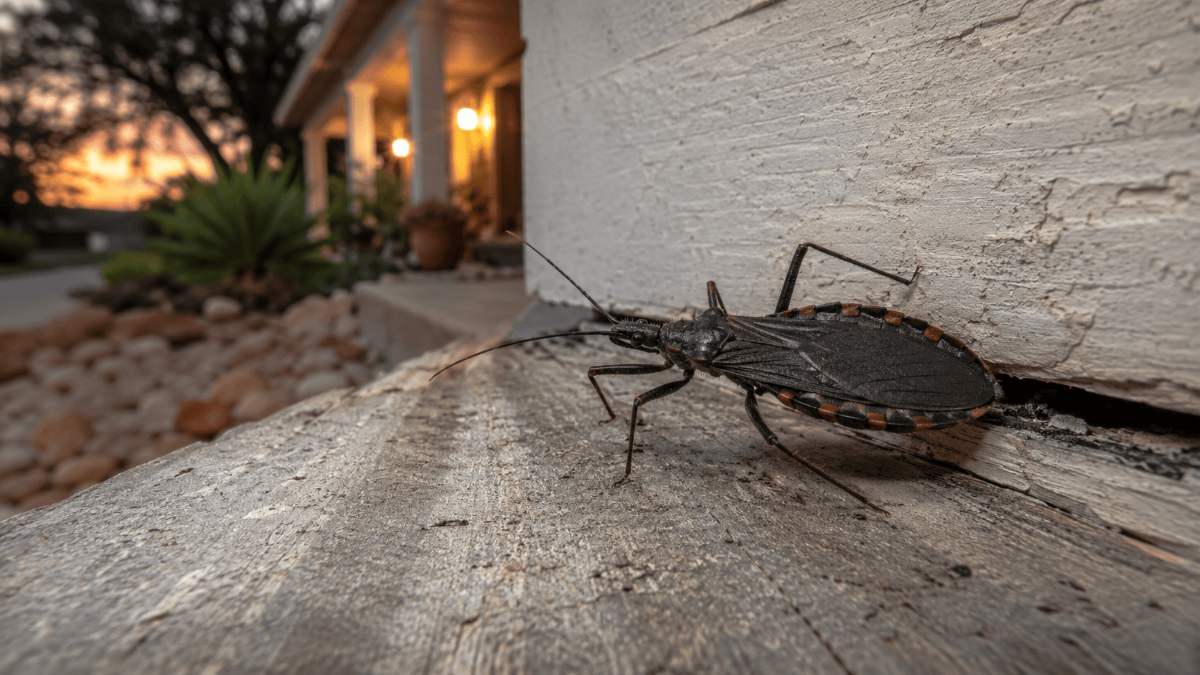
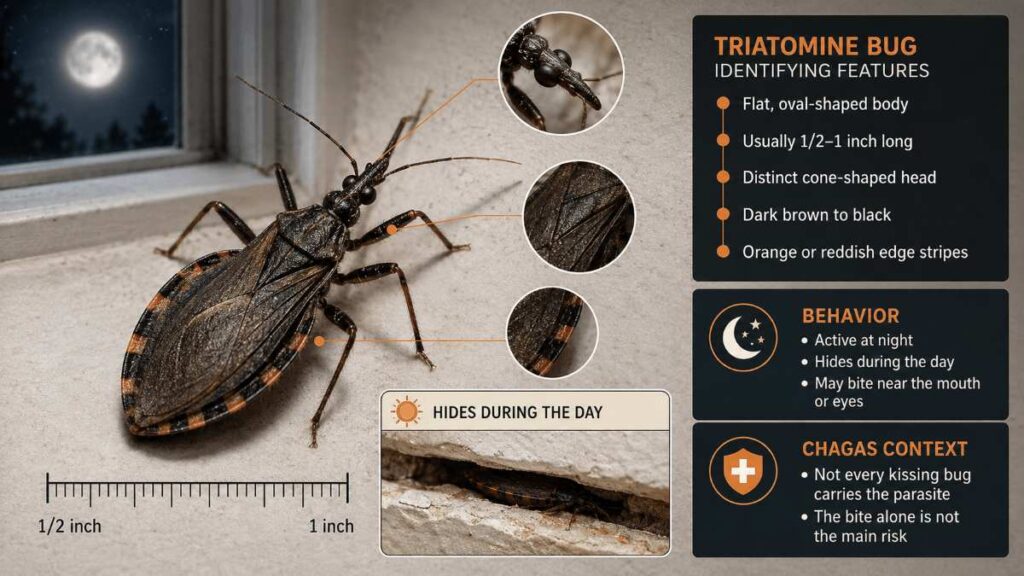
A kissing bug, known formally as a triatomine bug, is flat and oval-shaped, typically a half inch to one inch long, with a distinct cone-shaped head.
Most have dark brown or black bodies with orange or reddish stripes along the edges. They are active at night and hide during the day, which is why many homes with kissing bug activity never produce a direct sighting.
The name comes from an unfortunate habit of biting people near the mouth or eyes while they sleep. Not every kissing bug carries the parasite that causes Chagas disease, and a bite by itself is not what puts a person at risk. What happens in the hours afterward is where the real concern lies.
What Is Chagas Disease and How Serious Is It
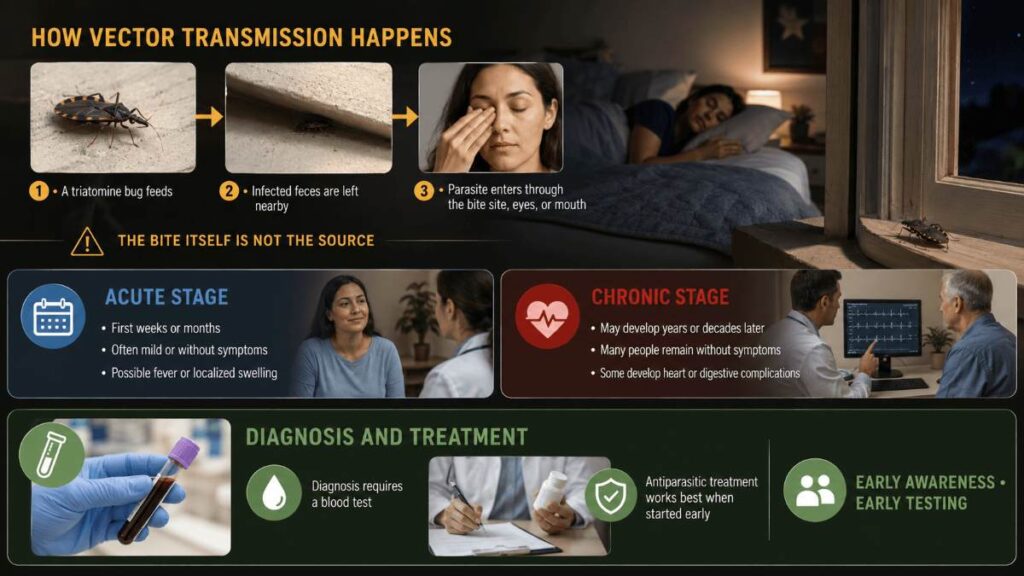
Here is the detail that surprises most people. Infection does not come from the bite itself. It happens when the bug’s feces, left near the bite site, gets rubbed into the wound, the eyes, or the mouth, often while a person is still asleep and unaware that anything occurred.
Chagas disease develops in two stages. The acute stage appears shortly after infection and is frequently mild or entirely without symptoms, sometimes limited to a low fever or slight swelling near the bite. The chronic stage is the one worth understanding, since it can take years or even decades to develop, and in a portion of untreated cases it eventually leads to serious heart or digestive complications.
Diagnosis is done through a blood test, and treatment with antiparasitic medication is most effective when started during the acute stage, shortly after exposure. This is precisely why the UTEP and Texas A&M AgriLife findings matter. A rise in parasite-positive kissing bugs near the border does not signal an outbreak, but it does mean the parasite has a larger presence in Texas than most residents assume, and it makes early awareness genuinely useful rather than alarmist.
Are Kissing Bugs a Risk for San Antonio Area Homeowners
It is tempting to treat this as a border region issue and move on, but kissing bugs are established well beyond that area. The brush country and Hill Country adjacent terrain around San Antonio, along with the greenbelts and wooded lots common in many of the city’s newer suburbs, offer the same warm, sheltered conditions these insects prefer elsewhere in the state.
Activity also tends to pick up in the warmer months, from spring through early fall, when the bugs are most active outdoors. None of this means the border research applies less here. If anything, it is a reason to take basic prevention seriously on a normal schedule rather than after a problem appears.
Where Kissing Bugs Hide and How They Get Inside
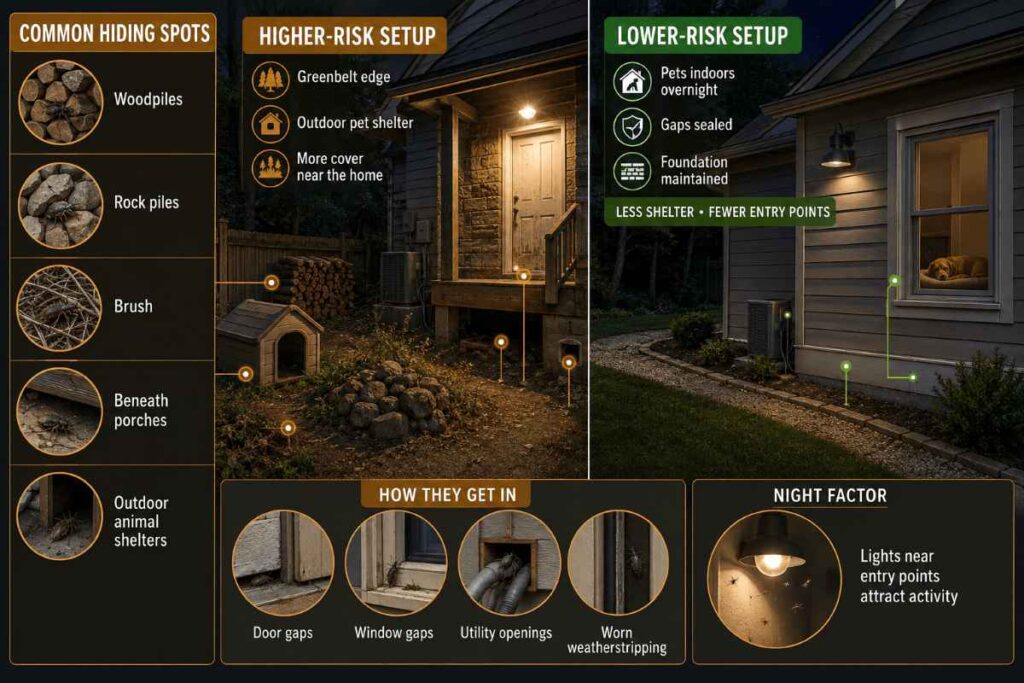
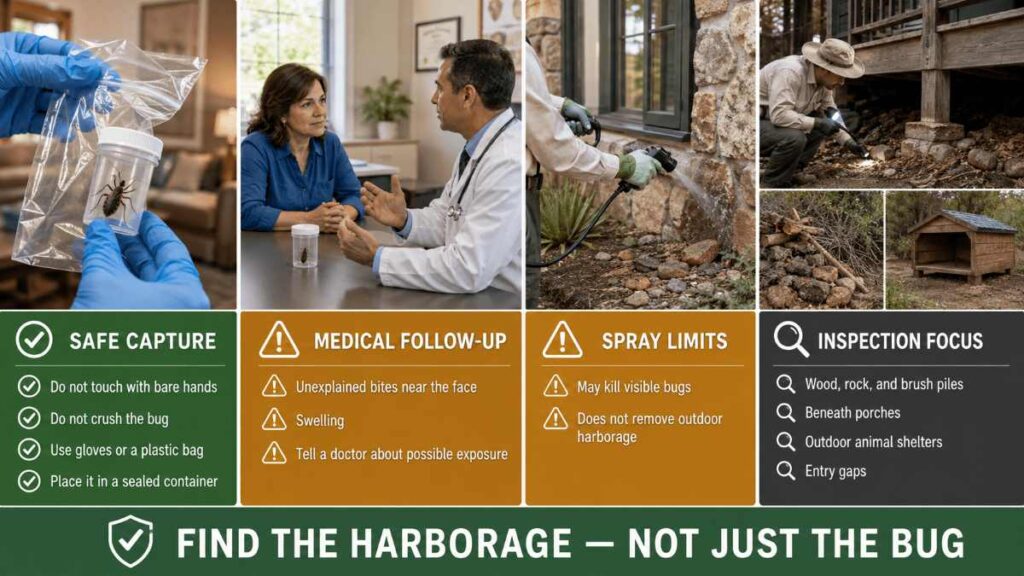
Kissing bugs favor the same quiet, sheltered spots many pests prefer: woodpiles, rock piles, brush, the space beneath a porch, and outdoor animal shelters such as dog houses. Nighttime lighting near entry points attracts them, and they can slip through small gaps around doors, windows, and utility openings, particularly in older homes where weatherstripping has worn down over time.
Picture two homes in the same neighborhood. One backs up to a wooded greenbelt with a dog house near the fence line, a layout that is common across parts of the San Antonio area. That combination of shelter, warmth, and a sleeping animal nearby is exactly what draws kissing bugs close. A similar home nearby, where pets sleep indoors overnight and the gaps around the foundation and doors have already been sealed, gives a kissing bug far fewer reasons to approach in the first place.
Signs You May Have a Kissing Bug Problem
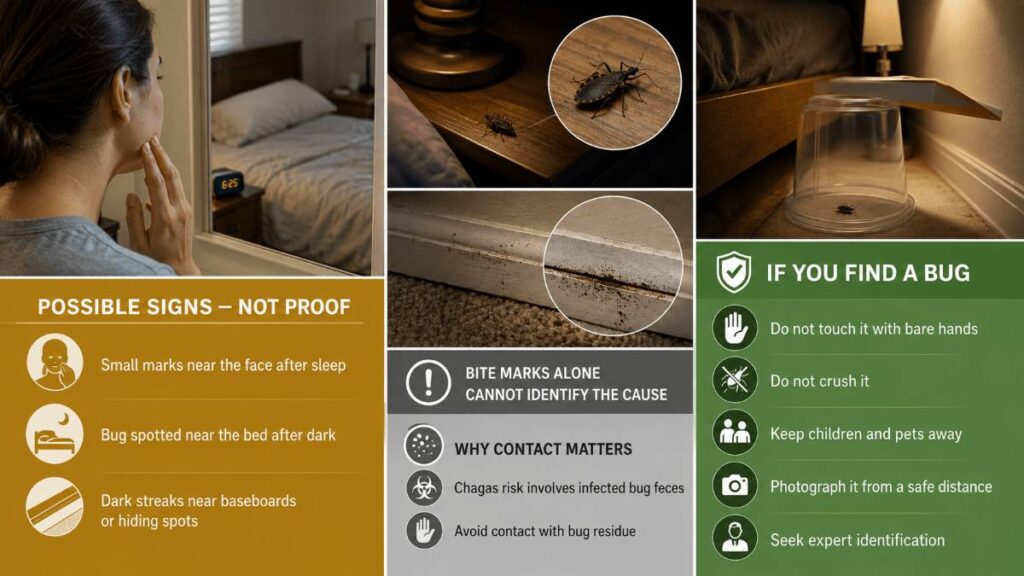
The clearest indicator is often the bite pattern itself: small marks clustered around the face, particularly near the eyes or mouth, that appear after a night’s sleep. Spotting the insect directly, especially near a bed after dark, is another sign worth taking seriously, along with dark, streaky residue near baseboards or other hiding spots. If you encounter one, avoid handling or crushing it with bare hands, since direct contact is how the parasite can spread.
How to Prevent Kissing Bugs From Entering Your Home
Prevention starts with sealing cracks and gaps around doors, windows, and utility entry points, and making sure door sweeps and window screens are in good working condition. Reducing bright outdoor lighting near entrances at night helps as well, since light draws these insects in, and swapping in yellow or sodium vapor bulbs cuts down on that attraction.
Keeping firewood, brush, and debris piles away from the foundation removes another common hiding spot. Homeowners with outdoor pets should consider bringing them inside overnight, or at minimum keep their outdoor shelter checked and cleaned on a regular basis, since kissing bugs are often found near where animals sleep.

Expert Tips
If you find a live kissing bug, do not touch it with bare hands. If you want it identified, capture it in a closed container rather than crushing it. Anyone who develops unexplained bites clustered near the face, especially with swelling, should mention it to a doctor. Store-bought sprays can eliminate the bugs you see, but they do not address the outdoor harborage sites where kissing bugs actually live and return to. That gap is exactly where a trained technician’s eye matters. Texas Beeline’s inspection process focuses on identifying those hiding spots around the exterior of the home, not just treating what is visible indoors.
Conclusion
Kissing bugs and Chagas disease sound like an alarming combination the first time you hear about them, but a clearer picture makes the risk easier to manage. Understanding how the parasite actually spreads, sealing up the entry points these bugs rely on, and keeping outdoor pet areas clean covers most of what a homeowner can control.
For anything beyond that, Texas Beeline offers exterior inspections built to catch the harborage sites a homeowner might not think to check. If you have noticed unusual bites, spotted a kissing bug, or simply want the confidence that your home is sealed against them, reach out and schedule a visit.
Avoid Costly Pest Control Mistakes!
Don’t let DIY errors cost you more in the long run! Beeline Pest Control of Texas provides expert inspections and science-based solutions to correct common pest control mistakes to avoid. Protect your San Antonio home with a customized plan that gets rid of pests for good!
No Hidden Charges
Frequently Asked Questions
What does a kissing bug look like?
Kissing bugs are flat, oval insects with a cone-shaped head, usually a half inch to one inch long, with dark brown or black bodies and orange or reddish markings along the edges. They are most active at night.
Are kissing bugs common in Texas?
Yes, kissing bugs are found throughout Texas, particularly in warmer, brushy areas. Recent research has focused on rising infection rates near the border, but the insects themselves live statewide.
How do kissing bugs spread Chagas disease?
Infection typically happens when the bug’s feces, left near a bite, comes into contact with the wound, eyes, or mouth, usually while a person is asleep and unaware. The bite itself does not transmit the parasite.
What are the symptoms of Chagas disease, and how is it diagnosed?
Early symptoms are often mild or absent, sometimes just a low fever or slight swelling near the bite. Diagnosis is done through a blood test, and most people do not seek one until the chronic stage appears years later, since the early stage is so easy to miss.
Can Chagas disease be treated?
Antiparasitic medication is most effective when started during the acute stage, shortly after infection. The chronic stage, which can take years to appear, is harder to treat, and a doctor is the right resource for diagnosis and next steps.
What should I do if I find a kissing bug in my house?
Avoid touching it with bare hands or crushing it. Capture it in a closed container if you want it identified, and consider contacting a pest control professional to inspect for nearby harborage sites.
Do kissing bugs bite during the day?
Rarely. They are nocturnal and typically bite while people are asleep, which is part of why bites often go unnoticed until the next morning.
Are pets at risk from kissing bugs?
Yes, pets that sleep outdoors can be bitten and can also attract kissing bugs to the areas where they rest. Bringing pets inside overnight and keeping outdoor shelters clean can reduce the risk.
How can I tell a kissing bug bite from a mosquito bite?
Kissing bug bites often appear in a cluster near the face, especially around the eyes or mouth, rather than the scattered single bites typical of mosquitoes. If you are unsure, mention it to a doctor, especially if swelling develops.
Should San Antonio area homeowners be concerned about Chagas disease specifically?
Current research on rising infection rates has focused on areas near the border, but kissing bugs live throughout Texas, including brush country and greenbelt areas around San Antonio. Basic prevention and awareness are worthwhile regardless of exact location, especially during the warmer months when activity increases.