
Are Fire Ants Dangerous to Pets? What Texas Homeowners Should Know

Keypoints:
- Fire ant stings are uncomfortable for pets but rarely dangerous on their own.
- A true allergic reaction is uncommon but serious and calls for immediate veterinary attention.
- Puppies, kittens, senior pets, and pets with limited mobility face higher risk from a fire ant encounter.
- Fire ant activity tends to pick up after rain and during the same warm, wet months that drive San Antonio’s mosquito season.
- Checking the yard regularly, especially after rain, is one of the simplest ways to prevent a painful surprise.
Introduction
Your dog trots out for a normal morning routine, noses around near the fence line, and suddenly yelps and starts frantically shaking a paw. One look down reveals a cluster of angry red bumps and a few stubborn ants still hanging on. If you own a pet in Texas, there is a decent chance you have already lived through some version of this, or you are quietly dreading the day you will.
Here is what actually happens when a pet crosses paths with fire ants, when it is a minor, if painful, inconvenience, when it is worth a call to the vet, and how to make your yard a safer place for the animals who live in it. For the full picture on identifying and dealing with fire ants generally, our fire ants guide covers that ground. This one is entirely about your pets.
Are Fire Ants a Real Concern for Pets in Texas
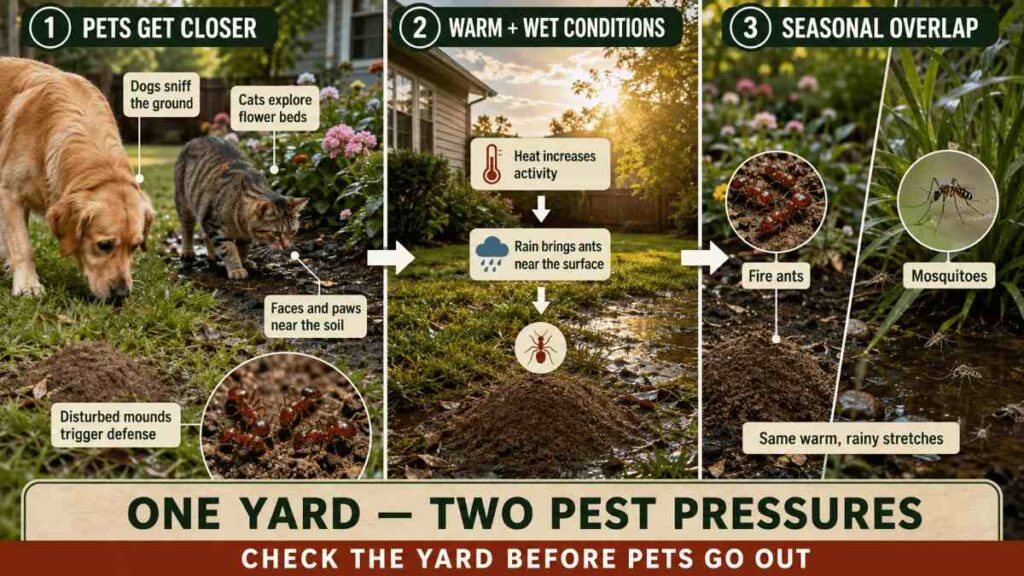
Fire ants show up in yards across the state, and pets run into them more directly than people usually do. A dog sniffing the ground or a cat poking around a flower bed ends up much closer to a disturbed mound than someone walking by in shoes, and neither animal has any built-in instinct to steer clear of a mound the way a person who has been stung before might.
Activity also tends to ramp up during the same warm, wet stretches of the year that make San Antonio’s mosquito season so rough, since fire ants, much like mosquitoes, become more active as heat and rainfall increase. That overlap is worth knowing, since a yard that needs attention for one pest often needs it for the other around the same time.
What Does a Fire Ant Sting Look Like on a Dog or Cat
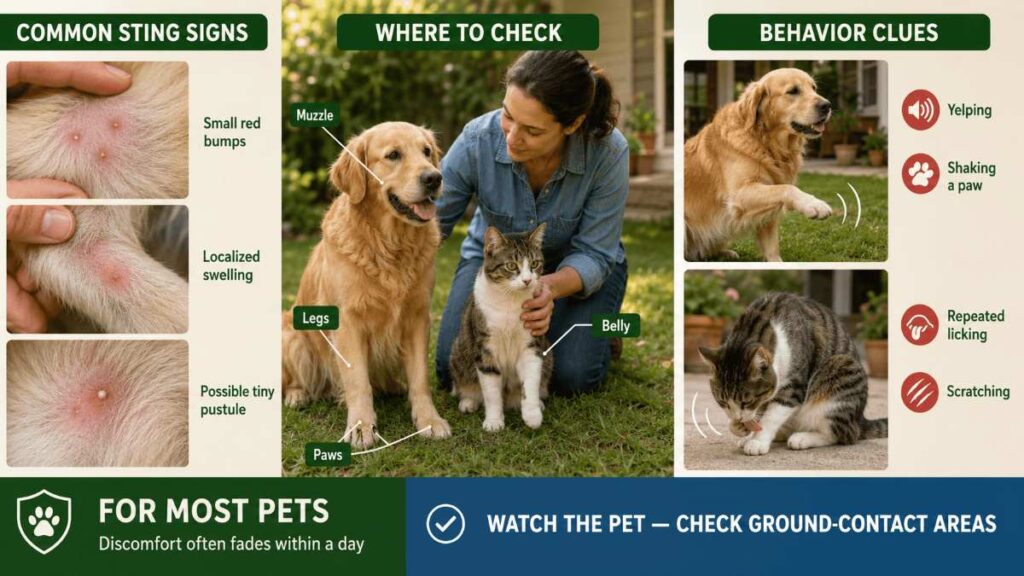
A fire ant sting on a dog or cat typically causes small, red, swollen bumps, sometimes with a tiny pustule at the center, most often on the paws, legs, muzzle, or belly. Those are the spots most likely to touch the ground or brush against a disturbed mound. You will usually catch your pet reacting in real time, yelping, shaking a paw, or licking and scratching at the spot over and over. For most pets, the discomfort fades within a day or so, not unlike how a sting affects a person.
When Is a Fire Ant Sting a Medical Emergency for a Pet
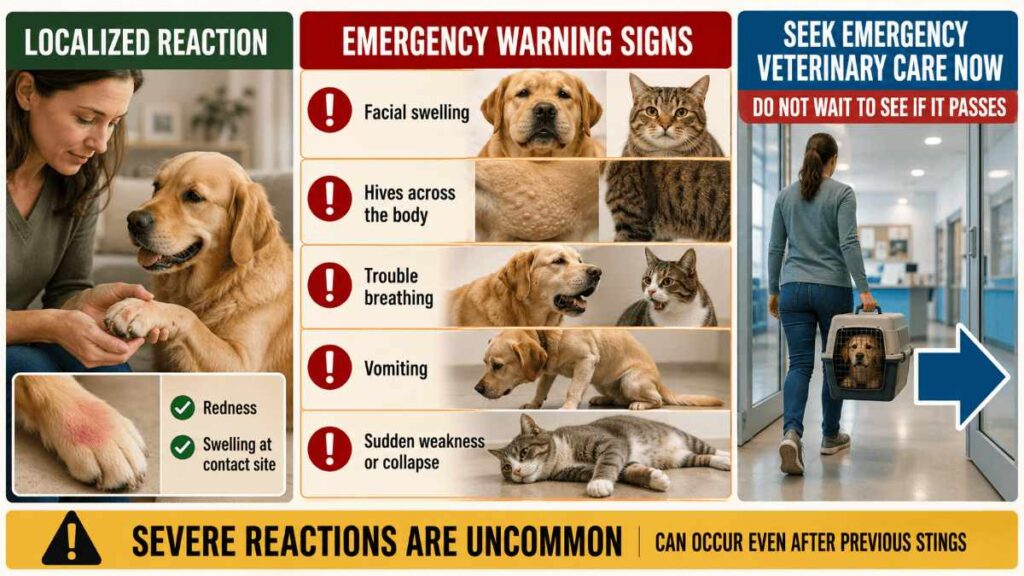
A typical sting causes redness and swelling that stays right where the ant made contact. A true allergic reaction looks different and more alarming. Watch for:
- Facial swelling
- Hives across the body
- Trouble breathing
- Vomiting
- Sudden weakness or collapse
Any of these signs means getting your pet to a veterinarian right away, not waiting to see how things develop. A severe reaction like this is not common, but it is worth knowing that it can appear even in a pet that has tolerated stings without issue in the past.
What Should I Do Right Away If My Pet Is Stung
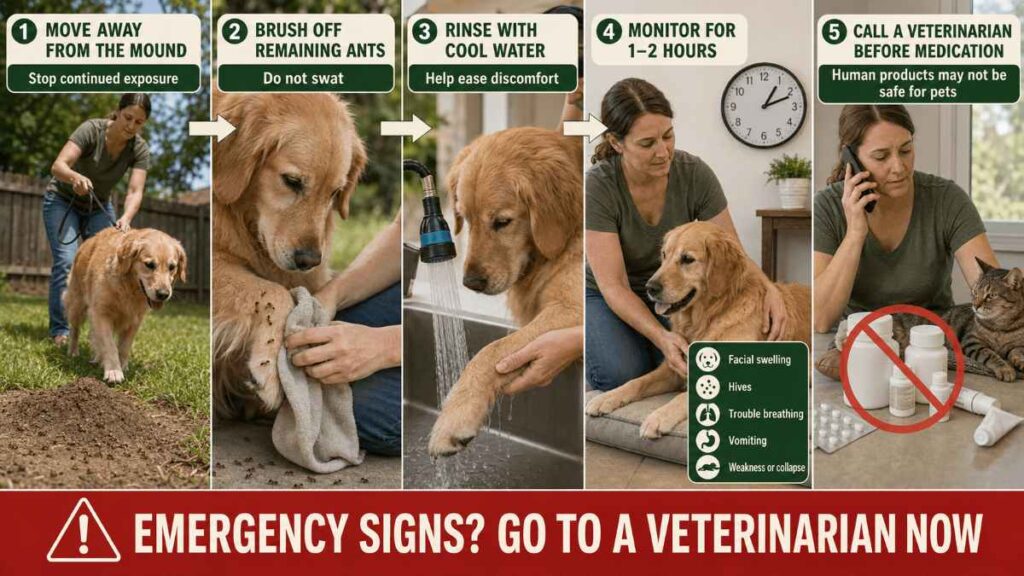
Move your pet away from the mound immediately so the encounter does not drag on. Brush off any remaining ants rather than swatting, since swatting tends to trigger more stings before the ants let go.
A rinse with cool water can help ease the discomfort. From there, keep a close eye on your pet for the next hour or two, watching specifically for the emergency signs above. Skip any medication or ointment until you have checked with your veterinarian, since not everything safe for humans works the same way for pets.
That kind of quick response matters for any pet, but it matters even more for the animals covered next, since they have less margin for error.
Are Some Pets More at Risk From Fire Ants Than Others
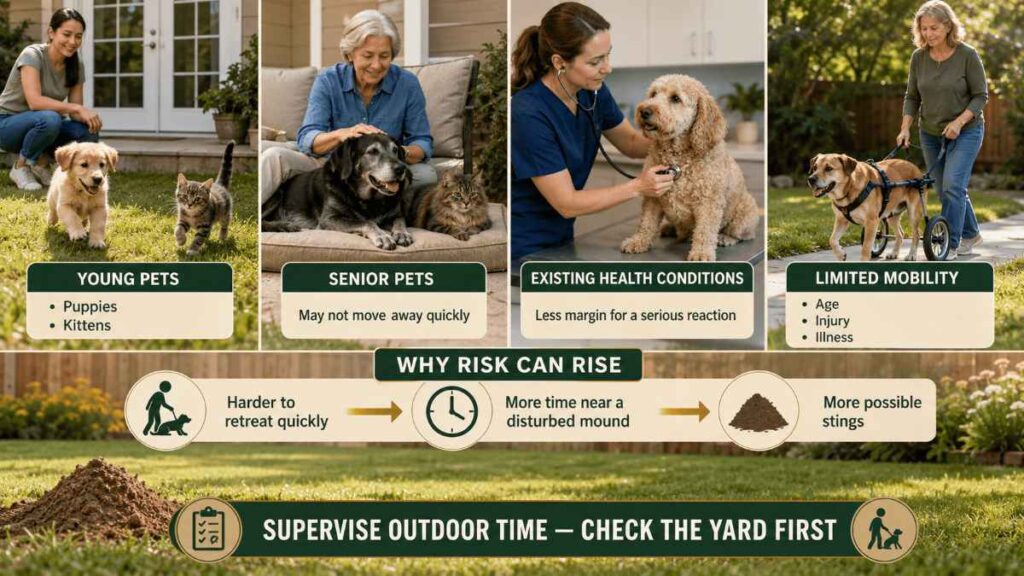
Yes. Puppies and kittens, senior pets, and animals with existing health conditions tend to be more vulnerable, both to a serious reaction and simply to getting stung multiple times before they can move away from a disturbed mound. Pets with limited mobility, whether from age, injury, or illness, carry a similar added risk, since retreating from an anthill quickly is not always an option for them.
Can Fire Ants Actually Kill a Dog or Cat
Serious harm from a fire ant encounter is uncommon, and when it happens, it almost always involves one of two things: a severe allergic reaction, or a very young, elderly, or immobile animal that was stung repeatedly before it could get away. Keeping that in perspective matters. There is no need to treat every trip outside as risky, but the warning signs above are worth remembering, and yard prevention is worth treating as more than a comfort issue.
How Can I Make My Yard Safer for My Pets
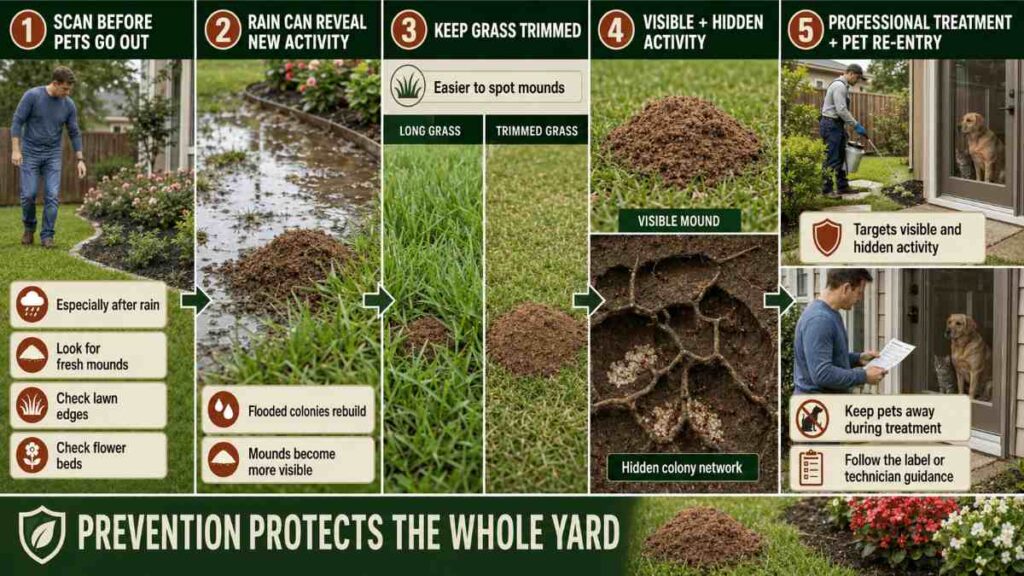
Prevention is where the real payoff is. Get in the habit of scanning the yard for mounds before letting pets out unsupervised, especially after rain. Heavy rain floods underground fire ant colonies, and the ants often respond by rebuilding mounds closer to the surface or relocating altogether, which is exactly why freshly rained on yards tend to have more visible, more disturbed mounds than usual. Keeping the grass mowed and trimmed makes those mounds easier to catch before your pet finds them the hard way.
Beyond what is visible, professional fire ant treatment reaches colonies you would never see on your own, since one visible mound is often just the tip of a much larger underground network. Texas Beeline uses pet conscious application methods and will always let you know how long to keep pets off a treated area before it is fully safe, so protecting your yard does not mean putting your animals at risk in the process.
Examples
Picture a dog let out first thing in the morning, before anyone has had a chance to check the yard, that steps straight into a mound hidden in a patch of tall grass near the fence, the kind of mound that often appears fresh after a hard rain. Now picture a similar yard where mounds get checked for regularly and treated the moment they appear. The second yard is not lucky. It is simply set up so a painful surprise never gets the chance to happen in the first place.
Expert Tips
Take a quick visual sweep of the yard before letting pets outside unsupervised, particularly in the morning or after rain, when mounds are most likely to be fresh. Keep your veterinarian’s contact information somewhere easy to find, just in case a reaction ever needs quick attention. Treating fire ant mounds early in the season, before colonies get the chance to grow large, cuts down on both the number of mounds in your yard and the odds of a surprise encounter later.
Conclusion and CTA
Most fire ant stings on pets are uncomfortable, not dangerous, but knowing the difference, and catching the warning signs of a real allergic reaction, matters a great deal when it counts. The best protection is still prevention, checking your yard regularly and dealing with fire ant colonies before pets ever find them, especially during the warm, wet months when activity picks up. Texas Beeline treats yards with pets in mind at every step, from inspection to application to cleanup, so reach out to Texas Beeline if you would like a professional set of eyes on your property before the next surprise encounter happens.
Avoid Costly Pest Control Mistakes!
Don’t let DIY errors cost you more in the long run! Beeline Pest Control of Texas provides expert inspections and science-based solutions to correct common pest control mistakes to avoid. Protect your San Antonio home with a customized plan that gets rid of pests for good!
No Hidden Charges
Frequently Asked Questions
Are fire ants dangerous to dogs?
Most stings cause temporary discomfort and localized swelling rather than serious harm. A true allergic reaction is uncommon but requires immediate veterinary attention.
What does a fire ant sting look like on a dog or cat?
Typically small, red, swollen bumps, sometimes with a tiny pustule at the center, most often on the paws, legs, muzzle, or belly.
How do I know if my pet is having an allergic reaction to a fire ant sting?
Watch for facial swelling, hives, difficulty breathing, vomiting, weakness, or collapse. Any of these signs call for immediate veterinary care.
What should I do if my dog gets stung by fire ants?
Move your pet away from the mound, brush off any remaining ants rather than swatting, rinse the area with cool water, and monitor closely for the next hour or two.
Can fire ants kill a dog or cat?
Serious harm is uncommon, but it can happen, usually involving a severe allergic reaction or a very young, elderly, or immobile pet stung repeatedly.
Are puppies and kittens more at risk from fire ants?
Yes, along with senior pets and those with existing health conditions or limited mobility, since they are less able to move away quickly from a disturbed mound.
Should I put anything on my pet's fire ant stings?
Check with your veterinarian before applying any medication or ointment, since not everything safe for humans is appropriate for pets.
How can I keep fire ants out of my yard for my pet's safety?
Check regularly for visible mounds, especially after rain, keep grass trimmed, and consider professional treatment to address colonies you cannot see.
Are cats or dogs more likely to be stung by fire ants?
Both are at risk, since curiosity and close contact with the ground make any pet a candidate for an encounter, regardless of species.
When should I take my pet to the vet after a fire ant sting?
If you notice facial swelling, hives, difficulty breathing, vomiting, or weakness, seek veterinary care right away rather than waiting to see if symptoms improve.