
The Leggy Truth: Are Centipedes Bad to Have Around Your Texas House?
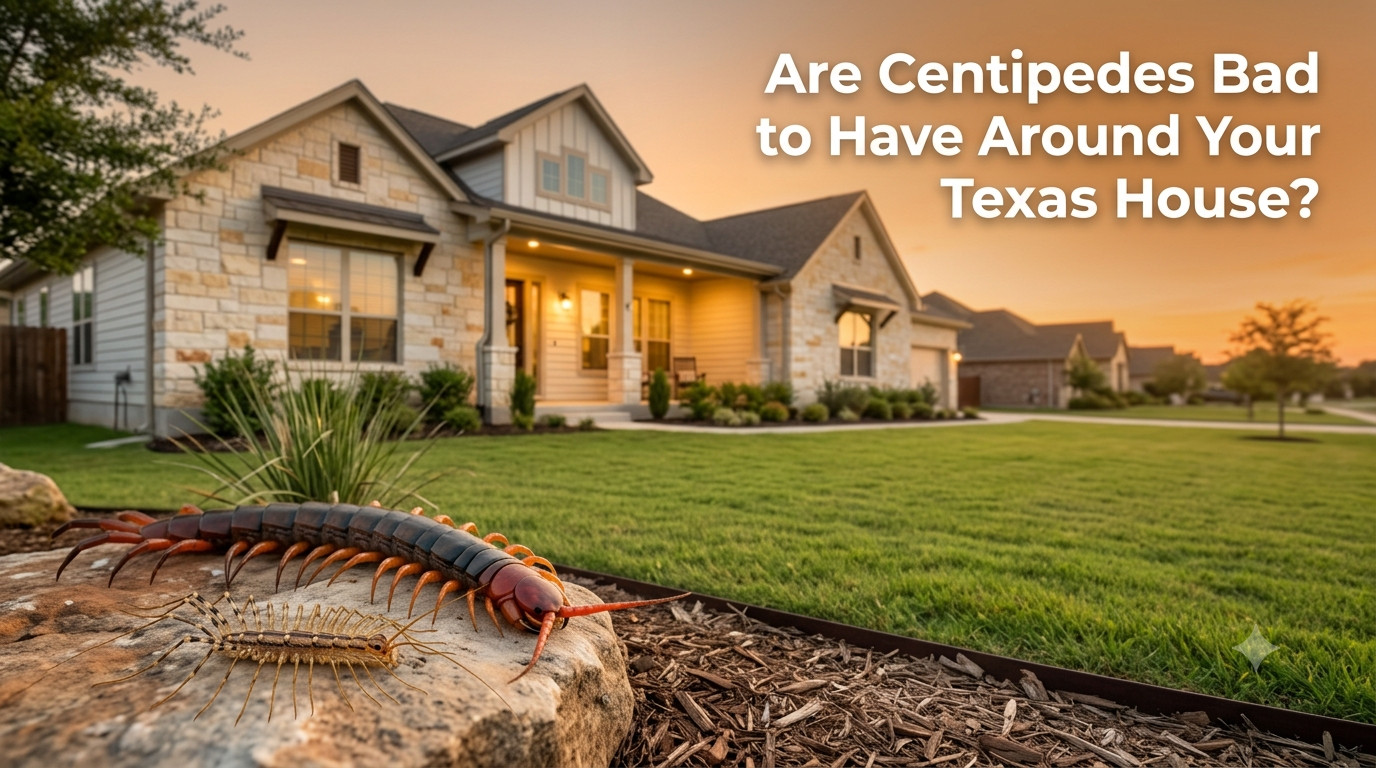
Key Points:
- Natural Insect Predators: Centipedes actively hunt and consume common household bugs like roaches, termites, and silverfish.
- The Underlying Danger: Finding them inside your property confirms a hidden, thriving infestation of the secondary insects they are hunting.
- Bite Risks: Native local species, like the giant Texas Red-Headed Centipede, can deliver an incredibly painful, venomous bite to humans and pets.
- Ineffectiveness of Smashing: Killing single centipedes does nothing to cure the root issue, nesting safely out of sight inside your walls.
A Multitude of Legs in the Lone Star State
Owning a piece of the Lone Star State comes with plenty of pride, but it also means dealing with some of the most resilient critters in North America. When the intense Texas heat cranks up, or sudden seasonal thunderstorms drench our clay soils, property owners face immense pressure from creeping invaders.
Nothing tests a person’s comfort quite like watching a rapid, multi-legged silhouette dart across a living room floor or slip beneath a commercial inventory rack. If you have recently spotted one of these leggy creatures, you are likely asking yourself a fundamental question: Are these things actually bad to have around, or are they helping me out?
Protecting your family from painful bites, keeping your customers safe, and defending your hard-earned business reputation requires knowing exactly what you are up against. While some backyard bugs are harmless neighbors, finding centipedes indoors usually signals a much deeper issue that requires professional Pest control services Texas property owners trust to keep their spaces secure.
Understanding the Threat of Texas Crawlers
Environmental Pressures Driving Pests Indoors
Our local climate is a major driver behind indoor pest activity. Long stretches of blistering summer heat followed by heavy downpours force moisture-loving pests to seek shelter inside air-conditioned properties. Texas homes built on slab foundations and commercial facilities with busy loading docks offer easy access points. Centipedes are highly drawn to damp, dark spaces like crawlspaces, wall voids, and areas behind plumbing fixtures.
Callout: For homeowners, the primary risk of letting these multi-legged hunters roam free is the threat of an accidental, painful encounter. For a business owner especially in food service, hospitality, or warehousing the presence of any visible pest can instantly lead to ruined inventory, negative online reviews, or even a failed health inspection.
Helpful Predators or a Sign of Something Worse?
To answer plainly: out in nature, centipedes are helpful predators. They spend their nights hunting down and eating highly destructive pests like termites, spiders, silverfish, and roaches. Because they eat the bugs we hate most, some people consider them nature’s free exterminators.
However, when they move inside your home or commercial facility, the equation changes completely. Indoor centipedes are a clear warning sign of a secondary infestation.
Trying to handle this issue with standard store-bought bug sprays or DIY traps rarely works. Sprays only kill the occasional centipede out in the open while doing absolutely nothing to wipe out the massive population of roaches or ants nesting deep within your property’s structure.
Expert Quote: “Centipedes are strict carnivores. They don’t move into a building for the ambiance or to chew on your woodwork. If you see them regularly, it’s because you have a robust, hidden buffet of other insects living inside your walls.” Licensed Texas Beeline Field Technician
Furthermore, Texas is home to some formidable species, including the infamous Texas Red-Headed Centipede (Scolopendra heros). According to the experts at the Texas A&M AgriLife Extension, these giants can grow up to 8 inches long and carry a potent venom. While their bites are rarely life-threatening to humans, they cause severe, throbbing pain, localized swelling, and burning sensations that you definitely want to keep away from children, pets, and restaurant patrons.
This is where the team at Texas Beeline steps in. Instead of just treating the symptom, we build a customized protection plan that eliminates both the centipedes and the underlying food source that drew them inside in the first place, ensuring your property remains safe and compliant.
Why Year-Round Protection Beats One-Time Fixes
Many property owners wonder if a single, one-time chemical treatment is enough to keep pests away for good. The reality of living in Texas is that pest pressure never completely stops. A one-time application might knock down the active bugs bouncing around your living area today, but it won’t stop the next wave of invaders from marching through your weep holes next month.
Myth vs Fact Comparison Box: • Myth: Clean homes and pristine businesses don’t get centipedes. • Fact: Even immaculate properties experience pest pressure. Pests seek out water and shelter from the Texas heat, entering through tiny structural cracks regardless of cleanliness.
Achieving true peace of mind requires a consistent strategy. Establishing a regular Quarterly pest management routine creates a continuous, protective perimeter around your building. This active barrier stops foraging insects before they ever get a chance to establish a nest indoors.
Modern property owners also want to know that their pest solutions are environmentally responsible. At Texas Beeline, we specialize in implementing Eco-friendly pest control methods that focus on targeted applications and structural exclusion. By minimizing broad chemical use and adhering to the safety standards outlined by the Environmental Protection Agency, we deliver hard-hitting results against pests while keeping your family, pets, and customers completely out of harm’s way.
DIY Traps vs. Professional Texas Beeline Expertise
It can be tempting to browse the home improvement aisles for DIY pest fixes, but tackling persistent pests on your own often leads to wasted money and endless frustration.
Why DIY Methods Often Fall Short
- The Safety Hazard: Misusing over-the-counter pesticides can accidentally expose your family, pets, or commercial inventory to harmful chemical residues.
- Hidden Entry Points: Unlicensed individuals often miss critical pest highways, such as unsealed weep holes, expansion joints, and high-moisture slab lines.
- Temporary Relief: DIY methods focus on the bugs you can see, missing the thousands of eggs and nests hidden safely out of sight.
The technicians at Texas Beeline possess deep local knowledge of Texas-specific structural vulnerabilities. We don’t just guess where the bugs are hiding; we track down the moisture issues and entry points unique to South Texas properties to deliver guaranteed, long-term relief.
Texas Beeline Property Protection Plans
Every property has its own unique layout and specific vulnerabilities. A historic home in Alamo Heights requires a completely different approach than a modern commercial warehouse near a shipping hub. Texas Beeline builds customized plans designed around your specific space:
- Quarterly Maintenance Program: Our signature program and the best value for year-round defense. We create a continuous shield around your structure, adapting our techniques to match shifting seasonal pest patterns.
- Specialized Targeted Services: High-intensity treatments tailored specifically for complex invasions, including destructive subterranean termites, persistent rodents, bed bugs, and industry-specific commercial threats.
- Free Initial Inspection: The first crucial step to reclaiming your space. Our licensed specialists walk your perimeter, identify active colonies, map entry points, and provide an honest, upfront quote.
Key Reminder: We adapt every service plan to balance the personal safety needs of Residential properties with the strict compliance and regulatory standards required for Commercial pest control settings.
Safety and Compliance Assurance for All Properties
Callout: Are the pest treatments safe for my family, pets, or restaurant customers? Yes, absolutely. At Texas Beeline, we utilize low-impact, eco-friendly products applied strictly according to state regulations and EPA guidelines. Our targeted application methods ensure that pests are eliminated without leaving dangerous residues in areas where your children play or where food is prepped and served.
Proactive Tips for a Pest-Free Property
While professional service provides your core defense, maintaining a clean and sealed perimeter goes a long way in reducing pest pressure. Use this checklist to protect your property:
For Homeowners:
- [ ] Seal Weep Holes: Install breathable mesh covers in your brick weep holes to block entryways for centipedes and scorpions.
- [ ] Manage Moisture: Fix leaky outdoor spigots and adjust sprinkler heads so they don’t spray directly against your slab foundation.
- [ ] Clear Leaf Litter: Keep mulch, dead leaves, and firewood piles at least three feet away from your home’s exterior walls.
For Business Owners:
[Tip: Check loading docks and dumpsters regularly for essential commercial property maintenance.]
- [ ] Maintain Loading Docks: Inspect dock levelers and rubber door seals frequently, replacing any worn components immediately.
- [ ] Elevate Inventory: Keep all boxed goods and raw materials stored at least six inches off the floor on metal shelving.
- [ ] Tighten Waste Management: Wash out outdoor dumpsters regularly and ensure all lids seal tightly to avoid attracting roach populations.

Conclusion: Protect Your Texas Property Today
Centipedes might be helpful hunters out in the wild, but inside your Texas home or business, they are an unwelcome warning sign of a larger pest problem. Don’t waste your time and energy tracking down individual bugs or spraying ineffective chemicals. Investing in professional, locally-owned protection is the absolute best way to safeguard your family’s health, keep your customers happy, and secure your property’s value.
Don’t let Texas pests claim your property or reputation. Contact Texas Beeline today for a free inspection and customized, guaranteed protection. We provide pest control services in San Antonio, Universal City, Converse, Castle Hills, Alamo Heights, Cibolo, and other areas in Texas.
To find out more about our residential pest control services and commercial pest control services, click the links and fill out our form, or call us directly at 210-739-1320.
Avoid Costly Pest Control Mistakes!
Don’t let DIY errors cost you more in the long run! Beeline Pest Control of Texas provides expert inspections and science-based solutions to correct common pest control mistakes to avoid. Protect your San Antonio home with a customized plan that gets rid of pests for good!
No Hidden Charges
Frequently Asked Questions
Are centipedes bad to have around your house?
While they do not damage wood or ruin food supplies, centipedes are bad to have indoors because they indicate a thriving infestation of other insects that serve as their food. Additionally, larger Texas species can deliver a very painful, venomous bite if stepped on or disturbed. It is always best to contact Texas Beeline to find and eliminate the root cause of their presence.
Are centipedes bad?
In an outdoor ecosystem, centipedes are not bad because they act as natural pest control by eating other annoying insects. However, inside a home or business, they are considered a hazardous pest due to their alarming appearance, potential to bite, and the secondary insect infestations they point to. Texas Beeline can inspect your property to ensure these creatures stay outside where they belong.
Are centipedes good or bad?
Centipedes are a mix of both; they are good for your garden because they hunt down agricultural pests, but bad for your indoor living spaces. Indoors, they cause unnecessary stress, risk biting your family or pets, and signal that other pests are nesting inside your walls. Professional management from Texas Beeline removes the guesswork and safely eliminates them from your structure.
Are centipedes helpful?
Yes, centipedes are helpful in nature because they are aggressive predators that consume roaches, silverfish, carpet beetle larvae, and termites. However, you should never rely on them to do your pest control indoors, as a growing centipede population means you already have a severe insect problem. Let Texas Beeline provide a clean, reliable solution through our targeted perimeter treatments.
Are centipedes pests?
Yes, once they cross the threshold into a home, restaurant, or warehouse, centipedes are classified as pests that can disrupt your comfort and threaten business compliance. Their venomous bites and unsettling looks make them completely unwelcome in any managed property. Relying on Texas Beeline’s quarterly management plans ensures these creeping pests stay far away from your indoor spaces.
Should I be worried if I see a centipede?
You don’t need to panic, but seeing a centipede inside means you shouldn’t ignore your property’s perimeter defenses. It strongly suggests that a hidden population of prey insects, like termites or roaches, is actively drawing them inside. Scheduling a free inspection with Texas Beeline is the easiest way to identify what is really hiding behind your walls.
Should I ignore centipedes?
Ignoring centipedes is a mistake because an unmanaged pest issue will only grow worse over time as more insects find ways inside. A single centipede can lay dozens of eggs, and their presence confirms that your current sealing and barrier methods are failing. Reaching out to Texas Beeline allows you to intercept the problem before it turns into an expensive headache.
Should you avoid killing centipedes?
While squishing a centipede eliminates that single insect, it does absolutely nothing to address the larger infestation hiding out of sight. Rather than running around trying to catch them individually, you should leave the eradication to the trained experts at Texas Beeline. Our team looks at the bigger picture to wipe out the entire pest population at the source.
Why should you not smash a centipede?
Smashing a centipede often leaves behind a messy, stubborn stain on your floors or walls and fails to address the hundreds of other bugs nesting out of view. Furthermore, trying to smash larger local species like the Texas Red-Headed Centipede can provoke them into delivering a painful defensive bite. Calling Texas Beeline ensures the safe, clean, and comprehensive removal of all target pests.