
Crickets at Home, Millipedes and Pill Bugs: Why They Pour Every Fall
Key Points
- Lights bring crickets. Field crickets peak in August and September and fly toward bright lights at night.
- Moisture brings millipedes and pill bugs. Heavy rain floods them out of the soil, and drought sends them looking for damp spots.
- None of the three can live long indoors, and none of them is dangerous. Dead ones by the door point to where they’re getting in.
- The fix is outside: better bulbs, door sweeps, and pulling mulch and moisture away from the foundation.
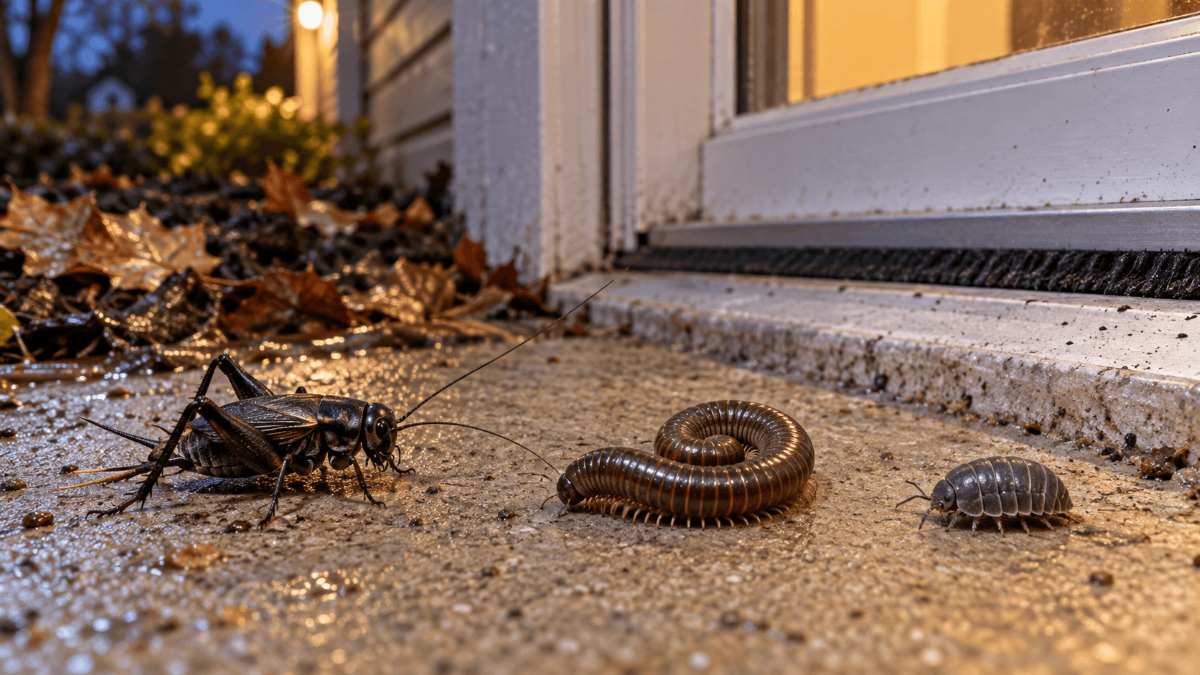
If you’re finding crickets at home, millipedes curled up by the patio door, or pill bugs in the bathroom, the weather is the reason. In fall, field crickets reach adulthood and fly toward lights at night, while rain or drought pushes millipedes and pill bugs out of the soil looking for the right amount of moisture.
The good news is that all three are harmless, and none of them survives long indoors. That means the fix happens outside your walls, not with sprays in the kitchen. Here’s how to tell which one you have, why it keeps showing up, and what stops it. For other pests, browse our Texas pest library.
Why Do Crickets, Millipedes, and Pill Bugs Come Inside in the Fall?
Fall weather sets off all three. Field crickets mature in late summer and fly toward bright lights during fall mating. Millipedes and pill bugs live in damp soil and mulch, so heavy rain drives them out looking for drier ground, while long dry spells push them toward moist spots next to your foundation.
|
Pest |
What sets it off |
Peak time in Texas |
|
Field crickets |
Outdoor lights, cool fronts, a summer drought ending |
August and September, usually for 4 to 6 weeks |
|
Millipedes |
Waterlogged soil after heavy rain, or drought |
After heavy rain or during drought |
|
Pill bugs and sowbugs |
Heavy rain; heat and drought |
After big rains and long dry spells |
Sources: Texas A&M AgriLife cricket fact sheet, AgriLife on fall cricket swarms, Centipedes and Millipedes, and School IPM on rain invaders.
That’s why fall around San Antonio is prime time. A long, dry summer followed by the first cool fronts and fall rain hits every trigger at once. The largest cricket outbreaks tend to follow dry springs and summers.
Which One Are You Seeing?
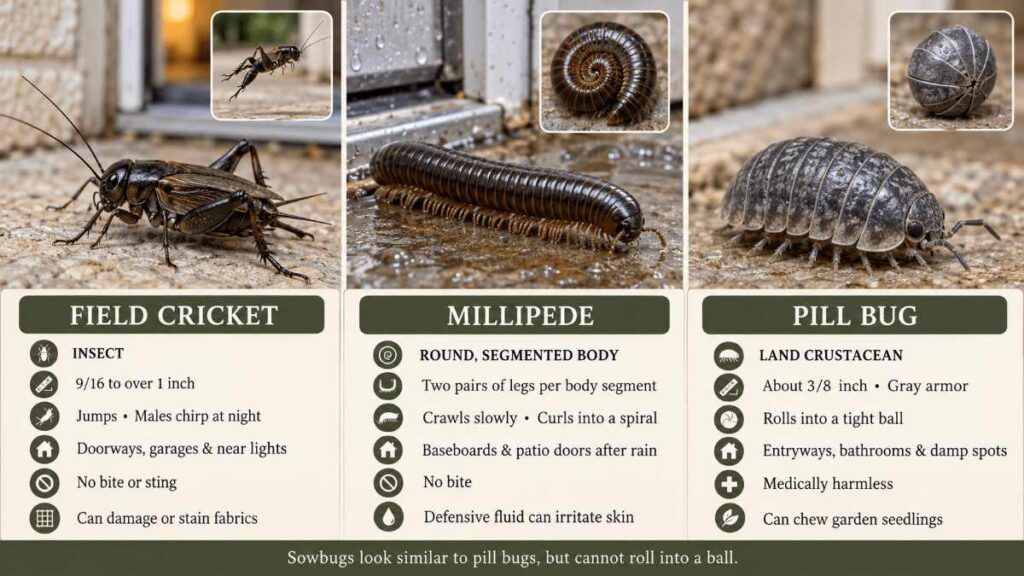
Look at how it moves. Crickets jump, millipedes crawl slowly and curl into a coil, and pill bugs roll into a ball.
| Field cricket | Millipede | Pill bug | |
| What it is | Insect | Arthropod with two pairs of legs per body segment | Land crustacean with gills |
| Size and look | 9/16 to over 1 inch, dark brown to black | Long, round body, brown to black | About 3/8 inch, gray, armored |
| Tell-tale behavior | Jumps; males chirp at night | Curls into a spiral when disturbed or dead | Rolls into a tight ball |
| Where it shows up | Doorways, garages, near lights | Baseboards and patio doors after rain | Entryways, bathrooms, damp spots |
| Harmful? | No bite or sting; can stain fabric | No bite; fluid can irritate skin | Medically harmless |
Black field crickets
If you’re finding crickets at home every evening, they’re most likely black field crickets. Most Texas outbreak crickets belong to this group, according to Texas A&M. They’re accidental invaders that don’t breed or set up permanent infestations indoors. Inside, they can damage fabrics and carpeting, and they’re known for chewing soiled or sweaty clothing.
Millipedes
Millipedes are slow, round-bodied decomposers that eat dead plant material in mulch, leaf litter, and compost. They don’t bite, but some give off a smelly fluid that can irritate skin and eyes, and Texas A&M says some species’ secretions can stain and even blister skin. Pick them up with a paper towel, not bare hands.
Don’t confuse them with centipedes. Centipedes are flat, fast predators with one pair of legs per segment and venom for catching prey. Our post on whether centipedes are bad in a Texas house covers those.
Pill bugs (roly-polies) and sowbugs
Pill bugs aren’t insects at all. The Texas A&M field guide calls them land crustaceans, closer to shrimp and crayfish, and they even have gills. Sowbugs look similar but can’t roll up. Both are medically harmless, though they can chew garden seedlings and transplants.
Why Do I Keep Finding Them Dead Inside?
Indoor air is too dry for them. Millipedes can dry out and die within hours indoors, and pill bugs usually die quickly from lack of moisture. Crickets can’t breed inside, so the ones you find came in from outdoors.
That makes the cleanup useful. A steady supply of dead bugs means the source is outside, usually lights or damp mulch right against the house, and the bodies show you where they’re getting in.
Expert tip: For one week, note where the bodies turn up each morning: a corner of the garage door, the patio slider, the laundry room threshold. Those spots tell you exactly where a new door sweep or weather-stripping will do the most good.
How Do You Keep Crickets, Millipedes, and Pill Bugs Out?
One outdoor checklist handles all three. Start with lights for crickets and moisture for millipedes and pill bugs, then close the gaps they share.
- Swap your bulbs (crickets). Cutting outdoor lighting is the most important step for stopping crickets at home. Yellow “bug light” and low-pressure sodium bulbs draw fewer crickets than standard bulbs, and turning floodlights off early helps.
- Seal the bottoms of doors (all three). Door sweeps with nylon bristles or rubber seals sharply cut cricket entry. Check thresholds and garage door seals too.
- Fill weep holes (all three). Steel or brass wool in brick weep holes blocks pests but still lets air move.
- Pull mulch back (millipedes, pill bugs). Keep mulch away from the foundation, turn it often, and rake up leaf litter.
- Dry out the edges (millipedes, pill bugs). Fix leaky spigots, adjust sprinklers that soak the slab, and point AC drip lines away from the house.
- Clear debris (all three). Move firewood, stones, boards, and compost piles away from the walls.
Sealing is homeowner or handyman work; Beeline Pest Control handles treatment, not exclusion.

What Should You Do With the Ones Already Inside?
Vacuum or sweep them up. Vacuuming millipedes rather than spraying them, and doesn’t recommend indoor sprays for crickets.
- Use a paper towel or glove for millipedes.
- Empty the vacuum outside so survivors don’t crawl back out.
- Check laundry piles and closets for crickets, since they go after soiled fabric.
- Clear dead crickets quickly. In big outbreaks, Texas A&M warns that piles of dead crickets can cause odors.
When Is It Worth Calling a Pest Control Company?
Often it isn’t. Cricket swarms usually last 4 to 6 weeks before numbers drop, and most millipede invasions pass quickly without insecticides.
It makes sense to call if:
- You’re sweeping up dozens or hundreds every morning
- The invasion keeps going for weeks
- The smell of dead crickets is building up in the garage
- You’ve done the checklist and crickets at home, millipedes, or pill bugs keep coming
For heavy cases, Texas A&M describes a perimeter treatment around the foundation, doors, and windows, and pill bug products must list pill bugs on the label. Beeline’s residential pest control service includes exterior treatments that target the areas these pests cross. Our professional Beeline technicians can also point out the gaps and damp spots worth fixing.
Lights for Crickets, Moisture for the Rest
Crickets at home usually mean your outdoor lights are pulling them in. Millipedes and pill bugs mean there’s too much moisture or mulch against your foundation. Fix those, close the gaps under your doors, and fall’s invasion gets much smaller.
If they keep coming anyway, we can help. Request a free quote, call 210-739-1320, or text 210-972-1672.
Avoid Costly Pest Control Mistakes!
Don’t let DIY errors cost you more in the long run! Beeline Pest Control of Texas provides expert inspections and science-based solutions to correct common pest control mistakes to avoid. Protect your San Antonio home with a customized plan that gets rid of pests for good!
No Hidden Charges
Frequently Asked Questions
Why are there so many crickets at home all of a sudden?
Field crickets reach adulthood in late summer and fly toward lights during fall mating. Texas A&M says outdoor lighting is the main reason crickets pile up around homes. A dry summer followed by cool fronts often makes it worse.
Do crickets bite or carry disease?
No. AgriLife’s Wizzie Brown says field crickets don’t sting or bite. They’re a nuisance because of chirping, fabric damage, and the smell of dead ones.
Will crickets lay eggs in my house?
No. Field crickets lay eggs in moist outdoor soil and don’t breed or set up permanent infestations indoors. The crickets inside your house all came in from outside.
How long do cricket invasions last in Texas?
Usually 4 to 6 weeks. Numbers rise, peak, and drop off, typically in August and September.
Why do millipedes come inside after it rains?
Heavy rain waterlogs the soil and forces millipedes to look for drier ground. Texas A&M notes that drought can also send them indoors looking for moisture. Either way, they usually die within hours inside.
Are millipedes poisonous to touch?
They don’t bite, but some give off a fluid that can irritate skin and eyes, and a few species’ secretions can stain or blister skin. Pick them up with a paper towel and wash your hands after.
What's the difference between a millipede and a centipede?
Millipedes have two pairs of legs per body segment, a round body, and move slowly. Centipedes have one pair per segment, a flat body, and venomous claws for catching prey.
Are pill bugs insects?
No. Pill bugs, or roly-polies, are land crustaceans related to shrimp and crayfish, and they breathe with gills. That’s why they need damp places to survive.
Why are pill bugs in my bathroom or entryway?
They’re looking for moisture, usually after heavy rain or during a dry spell. Damp mulch, leaky spigots, or wet soil next to the door give them a path in, but they die quickly once inside.
What outdoor lights attract fewer crickets?
Yellow “bug light” bulbs and low-pressure sodium lights attract fewer crickets than standard bulbs, according to Texas A&M. Turning off floodlights early in the evening also helps.